
AC Repair Cost in 2026: What Homeowners Should Expect
AC Repair Cost in 2026: What Homeowners Should Expect
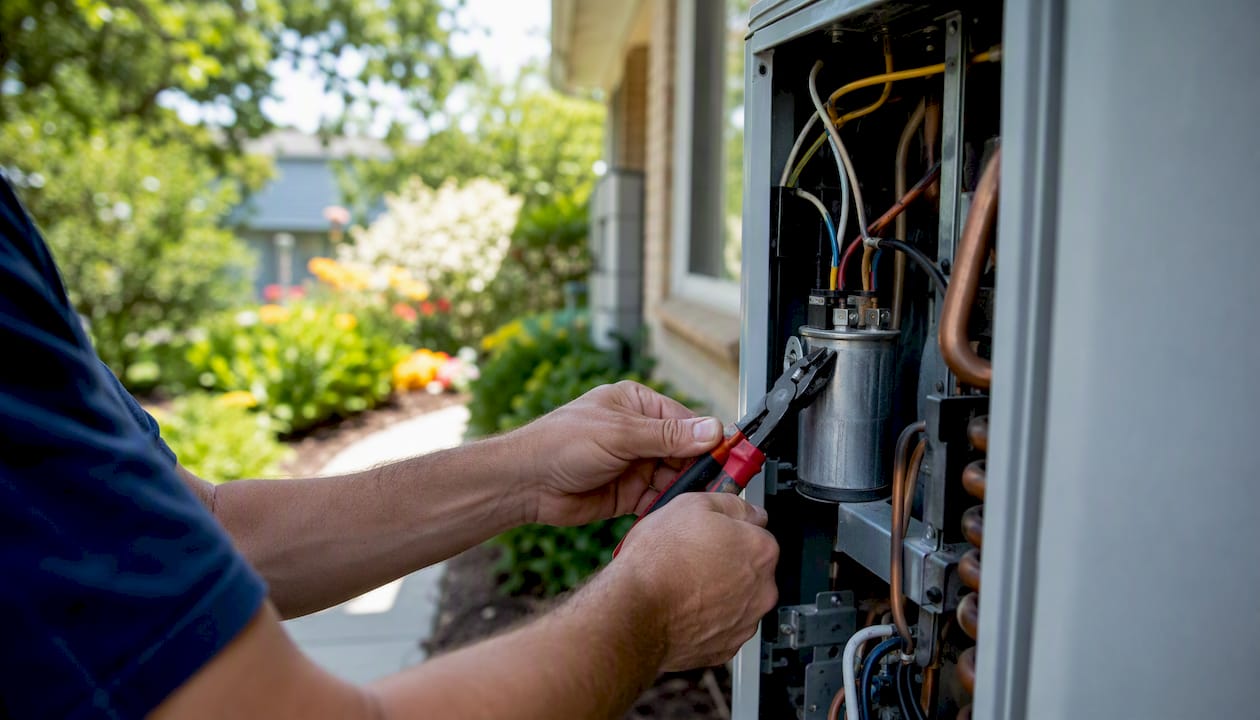
Most homeowners pay somewhere between $150 and $1,500 to fix a residential air conditioner, with the national average landing near $350. Simple fixes like a bad capacitor or a clogged drain line sit at the low end. A failed compressor or a leaking evaporator coil can push the bill past $2,000, and major sealed-system failures can reach $5,000 or more.
Here’s the fast version before you dig in:
- Cheapest common repairs: Capacitor replacement, thermostat swap, or drain-line flush typically run $150–$400 installed.
- Most expensive repairs: Compressor or coil replacements often land between $1,500 and $3,000 installed, sometimes higher.
- Biggest pricing driver: Whether the failed part is inside the sealed refrigerant system. Sealed-system work requires refrigerant recovery, more labor hours, and specialized handling.
Location, refrigerant type (R-22 vs. R-410A), unit age, and whether you call on a weekend at 10 PM can all move the final number by hundreds of dollars.
Key Takeaways
Most residential AC repairs fall between $150 and $1,500, with the national average near $350, but sealed-system failures and R-22 refrigerant costs can push bills well past $2,000.
| Point | Details |
|---|---|
| Headline cost range | Most repairs run $150–$1,500 installed; national average is near $350. |
| Sealed-system repairs cost more | Compressor and coil replacements run $1,500–$3,000 due to refrigerant handling and labor. |
| The 50% replacement rule | If one repair exceeds ~50% of a new system’s cost, replacement is usually the smarter move. |
| Always get an itemized quote | Ask for part number, part cost, labor hours, and labor rate listed separately on any repair over $500. |
| Local AI Page ZIP search | Search verified local HVAC profiles by ZIP code to compare providers and get a second opinion fast. |
Table of Contents
- What does AC repair cost by component?
- What factors push your AC repair bill higher?
- How do HVAC companies actually price their work?
- Should you repair or replace your AC?
- How long does an AC repair take?
- How can you lower your AC repair costs?
- How do you find and vet a trustworthy local HVAC technician?
- Why the cheapest quote is rarely the real bargain
- Find a local HVAC pro without the guesswork
- Sources
What does AC repair cost by component?
The table below shows typical installed prices for the most common residential repairs. “Installed” mean parts plus labor plus the diagnostic fee, which is how most HVAC companies quote the work.
| Repair / Component | Typical Installed Price Range |
|---|---|
| Capacitor replacement | $150–$400 |
| Contactor replacement | $150–$350 |
| Fan motor (condenser or air handler) | $300–$700 |
| Thermostat replacement | $150–$500 |
| Refrigerant recharge (R-410A) | $150–$400 |
| Refrigerant recharge (R-22, legacy) | $600–$1,800 |
| Drain line flush / condensate repair | $100–$300 |
| Evaporator coil replacement | $800–$2,000 |
| Condenser coil replacement | $1,000–$2,500 |
| Compressor replacement | $1,500–$3,000 |
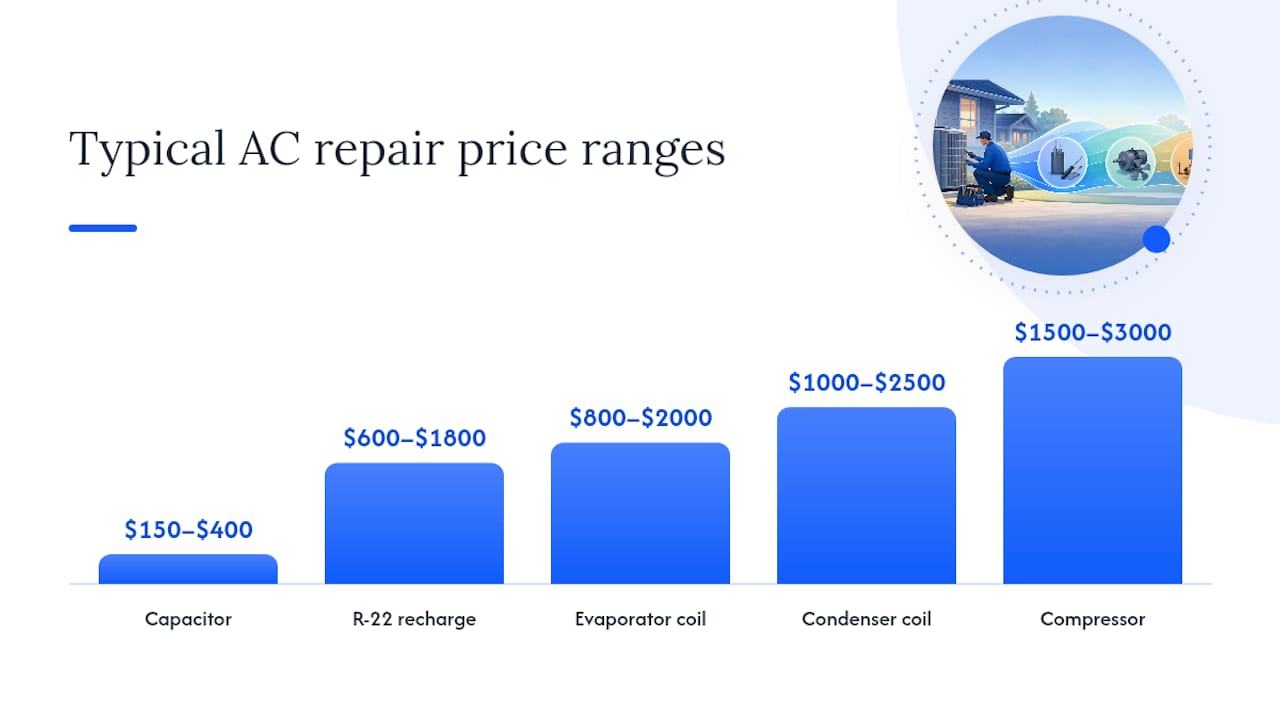
Ranges reflect typical U.S. residential installed prices and will vary by region, unit size, and brand. Treat them as a sanity-check benchmark, not a guaranteed quote.
The refrigerant type gap is real
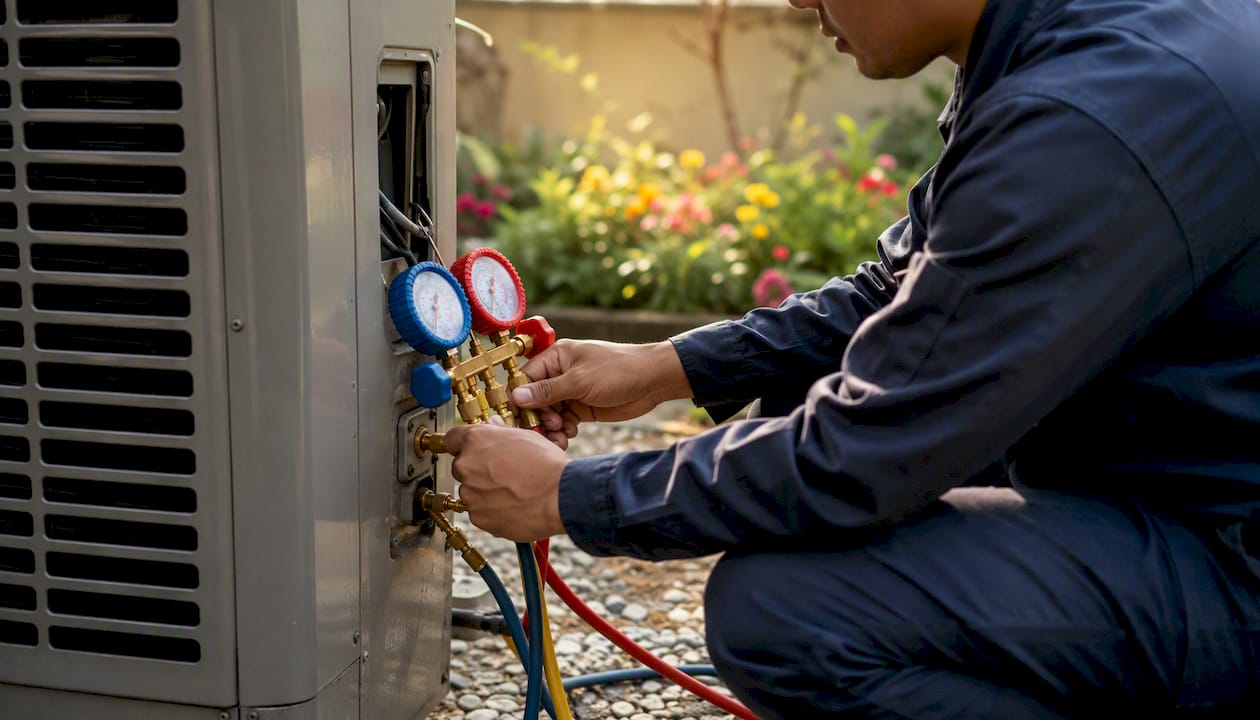
R-22 was phased out of production in 2020. What’s left in the supply chain is expensive, and recharging an older R-22 system can cost $600–$1,800 depending on how many pounds the system needs. An R-410A recharge on a newer system typically runs $150–$400. If your unit is more than 15 years old and still uses R-22, that cost difference alone is often enough to tip the math toward replacement.
Why sealed-system repairs cost so much more
Parts like the evaporator coil, condenser coil, and compressor sit inside the refrigerant circuit. Replacing any of them requires a certified technician to recover the existing refrigerant, open the system, swap the part, pressure-test the lines, pull a vacuum, and recharge. That process adds two to four hours of labor on top of the part cost, which is why a compressor that costs $400–$700 as a part alone ends up at $1,500–$3,000 installed.
One thing worth knowing: A failing capacitor can produce the exact same symptoms as a dying compressor. The capacitor costs $8–$45 as a part and $150–$400 installed. Always ask the technician to test and document the capacitor result before authorizing a compressor replacement.
What factors push your AC repair bill higher?
Two homeowners with the same broken part can get quotes that differ by $300 or more. Here’s what’s actually driving that gap:
- Local labor rates: An HVAC tech in rural Mississippi charges less per hour than one in San Francisco or Boston. Labor is often 40–60% of the total bill.
- Diagnostic / service-call fee: Most companies charge $75–$150 just to show up and diagnose the problem. Some credit it toward the repair; others don’t. Ask before they arrive.
- Part availability: Common parts like capacitors are on every truck. Specialty parts for older or less common units may need to be ordered, adding days and sometimes a second trip charge.
- Refrigerant type: As covered above, R-22 systems cost significantly more to recharge than R-410A systems.
- Unit age and warranty status: Sealed-system parts on units under 10 years old often carry a manufacturer warranty covering the part cost. Labor is almost never covered, but a covered part can save you $400–$1,000.
- After-hours and emergency rates: Emergency or after-hours service commonly runs 1.5–2× the standard labor rate. If the system fails on a Friday night but the house is tolerable, waiting until Monday morning can save a meaningful amount.
- Scope creep: A tech called for one symptom sometimes finds secondary damage. A leaking coil may have corroded nearby components. Get a written estimate that lists every line item before approving anything beyond the initial diagnosis.
What the same repair looks like in two different markets
Say a condenser fan motor fails. The part itself runs about $80–$150. In a lower-cost market (think mid-size Midwest city), one hour of labor at $80–$100/hour plus a $75 service call puts the total around $250–$325. In a high-cost coastal market with a $150 service call and $130–$150/hour labor, the same job lands at $400–$500. Same part, same hour of work.
Permits rarely come into play for standard component swaps. They can be required for major duct modifications, refrigerant-line rerouting, or structural changes to the air handler location. Ask your contractor upfront if the job scope triggers a permit requirement in your municipality.
How do HVAC companies actually price their work?
Reading an invoice is easier once you know what the line items mean. Most HVAC companies use one of three pricing structures:
- Flat-rate (book pricing): The company charges a fixed price per repair type, regardless of how long it takes. Common for standard replacements like capacitors, contactors, and thermostats.
- Hourly labor plus parts: You pay a set rate per hour plus the actual cost of parts (often with a markup). More common for diagnostic-heavy or unusual jobs.
- Bundled installed price: A single number covering parts, labor, and the service call. This is what most quotes look like for common repairs.
What a typical invoice includes
When you approve work, expect to see most of these line items:
- Service call / diagnostic fee: $75–$150 (ask if it’s credited toward the repair)
- Labor: Charged hourly ($80–$150/hour depending on market) or bundled
- Parts: The actual component being replaced
- Refrigerant: Charged per pound if the system needs a recharge
- Refrigerant recovery fee: Required by EPA regulations when opening the sealed system
- Disposal fee: Some companies charge to properly dispose of old parts or refrigerant
- Permit fee: Only when local code requires it
A fair installed price bundles the first three into one number. When a quote separates them, you can check whether the parts markup is reasonable by looking up the part number. Excessive markups (3–4× retail) on a $400 part are worth questioning.
Pro Tip: Ask specifically: “Is the diagnostic fee credited toward the repair if I approve the work today?” Most reputable companies say yes. If the answer is no, factor that $75–$150 into your cost comparison when getting multiple quotes.
Should you repair or replace your AC?
The industry’s standard rule of thumb: if the repair cost exceeds roughly 50% of what a new system would cost, replacement is usually the smarter long-term move, especially for equipment older than 10–12 years. A new central AC system typically runs $4,000–$8,000 installed, so that threshold sits around $2,000–$4,000.
Work through this checklist before approving a major repair:
- How old is the unit? Systems under 8 years old are generally worth repairing. Over 15 years, replacement math often wins.
- How many repairs in the last two years? One repair is normal. Two or three suggests the system is degrading broadly.
- Is the part under warranty? Check the serial number with the manufacturer before paying for a covered part.
- What’s the SEER rating? Older units running at SEER 10–12 cost significantly more to operate than a new SEER 18–20 system. Factor in annual energy savings.
- Is there a safety concern? Refrigerant leaks near living spaces or electrical issues warrant faster action.
- What does the 50% rule say? Divide the repair quote by the cost of a comparable new system. Above 50%, lean toward replacement.
Worked example: $2,000 compressor repair vs. replacement
Say your 13-year-old central AC needs a compressor. The quote is $2,000. A new comparable system installed runs $6,500.
- 50% threshold: $6,500 × 50% = $3,250. At $2,000, the repair is below the threshold.
- But: The unit is 13 years old with an expected life of 15–20 years. You’re paying $2,000 for 2–7 more years of service on an aging system.
- Operating cost: If the old unit runs at SEER 12 and a new one runs at SEER 18, the energy savings over five years could offset $800–$1,500 of the replacement cost depending on your climate and usage.
- Verdict: At 13 years, this is a genuine coin-flip. If the rest of the system is in good shape and the unit has been reliable, the repair makes sense. If you’ve had two other repairs in the past three years, replacement is the better bet.
Pro Tip: Before authorizing any compressor replacement, ask the tech to check the unit’s serial number against the manufacturer’s warranty database. Sealed-system parts on units under 10 years old often carry a 5–10 year parts warranty. Labor won’t be covered, but a covered compressor part can save you $400–$700 on that bill.
How long does an AC repair take?
Timing depends almost entirely on what broke.
- Minor repairs (under 1–2 hours): Capacitor, contactor, thermostat, drain-line flush, or a simple refrigerant top-off. The tech diagnoses, fixes, and tests in a single visit.
- Moderate repairs (2–4 hours): Fan motor replacement, minor refrigerant leak repair, or a condensate pump swap. Usually done in one visit if the part is on the truck.
- Sealed-system repairs (4–8+ hours, often a return visit): Coil or compressor replacement requires refrigerant recovery, part removal, installation, pressure testing, vacuum, and recharge. If the part isn’t on the truck, expect a return visit in 1–5 business days depending on availability.
During the visit, a thorough technician will: check thermostat calibration, test capacitor and contactor readings, measure refrigerant pressure, inspect coils for fouling or corrosion, and check electrical connections. That diagnostic process takes 30–60 minutes before any repair work starts.
If the tech needs to order a part, ask them to schedule the return visit before they leave and confirm whether a second service-call fee applies. Many companies waive the second trip charge when the part was ordered on the first visit. Get that in writing.
How can you lower your AC repair costs?
Prevention is cheaper than repair. So is knowing what to check before you call.
Before you call a technician, check these yourself:
- Is the thermostat set to “cool” and the temperature set below the current room temp?
- Has the circuit breaker for the air handler or condenser tripped?
- Is the air filter clogged? A blocked filter can cause the evaporator coil to freeze and shut the system down.
- Is the outdoor condenser unit clear of debris, overgrown shrubs, or anything blocking airflow?
- Is the condensate drain line backed up? A clogged drain triggers a float switch that shuts the system off.
These five checks resolve a surprising number of “broken AC” calls and cost nothing.
Ongoing cost-saving habits:
- Change the air filter every 1–3 months. A dirty filter is the single most common cause of avoidable service calls.
- Clean the condenser coils annually. A garden hose and a coil cleaner spray take 20 minutes and prevent efficiency loss.
- Schedule a professional tune-up each spring before peak cooling season. Most HVAC companies offer maintenance visits for $80–$150 that catch small problems before they become expensive ones.
- Consider a service or maintenance plan if your system is older. Annual plans typically run $150–$300 and often include priority scheduling, discounted parts, and waived diagnostic fees.
- Use a programmable or smart thermostat to reduce runtime hours. Fewer hours means less wear on the compressor and fan motors.
Pro Tip: For any repair over $500, get at least two written, itemized quotes. Ask each company to list the part number, part cost, labor hours, labor rate, and service-call fee separately. That breakdown makes it easy to spot whether you’re being charged $300 for a $40 part.
How do you find and vet a trustworthy local HVAC technician?
Hiring the wrong tech is often more expensive than the repair itself. A misdiagnosis, an unnecessary part replacement, or shoddy workmanship can turn a $300 fix into a $1,500 problem.
Vetting checklist before you hire:
- State HVAC license (required in most states; verify through your state contractor licensing board)
- General liability insurance and workers’ compensation coverage
- Written estimate before any work begins
- Warranty on both parts and labor (90 days minimum; 1 year is better)
- Local business address and verifiable reviews on Google or a trusted directory
- EPA 608 certification for any technician handling refrigerant
Red flags to walk away from:
- Vague verbal estimates with no itemization
- Pressure to replace the entire system without testing individual components
- Refusal to show license or insurance on request
- No local address or only a cell number
- Diagnosis delivered in under 10 minutes with no measurements taken
Two short call scripts that help
When scheduling the diagnostic visit: “Can you tell me your diagnostic fee, and is it credited toward the repair if I approve the work today? Also, is the technician EPA 608 certified and does your company carry liability insurance?”
When getting the written quote: “Can you give me an itemized quote that lists the part number, part cost, labor hours, labor rate, and service-call fee separately? And what warranty do you offer on parts and labor?”
Local AI Page lets you search verified HVAC business profiles by ZIP code, with direct contact details, service area information, and customer reviews in one place. You can also browse HVAC listings like Climate Control Services to see what a complete, vetted provider profile looks like before you call.
Why the cheapest quote is rarely the real bargain
Here’s an opinion worth sitting with: most homeowners focus on the headline number and miss the two questions that actually determine whether they got a good deal.
The first is whether the diagnosis was thorough. A tech who spends 10 minutes and immediately recommends a $2,500 compressor replacement without testing the capacitor, checking refrigerant pressure, or documenting readings is not saving you time. A capacitor costs $150–$400 installed. A compressor costs $1,500–$3,000. The symptom overlap between the two is nearly complete. Insisting on documented test results before approving a major repair is not being difficult. It’s basic consumer protection.
The second question is whether the warranty terms are real. A 90-day labor warranty from a company that may not answer the phone in 90 days is worth nothing. A one-year parts-and-labor warranty from a licensed, insured local contractor with 200 Google reviews is worth paying an extra $100 for.
The $5,000 rule that circulates in HVAC circles is a useful shorthand, but it oversimplifies. The real calculation is: repair cost, divided by the remaining useful life of the system, compared against the cost of a new system amortized over its full life, adjusted for energy savings. Most homeowners don’t need to run that math precisely. They just need to know that a $2,000 repair on a 14-year-old system deserves a second opinion, and that Local AI Page makes it easy to find a second qualified technician nearby without starting the search from scratch.
Find a local HVAC pro without the guesswork
When you’re staring at a $1,800 repair quote and wondering if it’s fair, the fastest reality check is a second opinion from a vetted local technician.

Local AI Page connects homeowners with verified HVAC providers in their area through a simple ZIP code search. Each profile includes service area details, direct contact information, customer reviews, and FAQs, so you can compare two or three local contractors in minutes rather than hours. Search your ZIP code, pull up two or three HVAC profiles, and make one call to each using the contact details on the listing. You’ll have a second quote in hand before you approve anything expensive.
Browse local HVAC providers by ZIP code and contact them directly, no middleman required.
Sources
The ranges in this article draw from the following sources. Each is worth bookmarking if you want to dig deeper on a specific repair or check regional pricing in your state.
- What Is the Average Central Air Conditioner Repair Cost?
- AC Repair Cost in 2026: Is Your Quote Fair?
- AC Repair Cost: $150-$3,000 by Component (2026)
- How Much Does Air Conditioning Repair Cost? (2026 Guide) | CostWhale
All ranges are estimates for typical U.S. residential jobs. Actual costs vary by region, unit size, brand, and current parts availability. Use these figures as benchmarks, not guarantees, and always get a written itemized quote before approving work.