
HVAC Maintenance Cost: What Homeowners Actually Pay
HVAC Maintenance Cost: What Homeowners Actually Pay
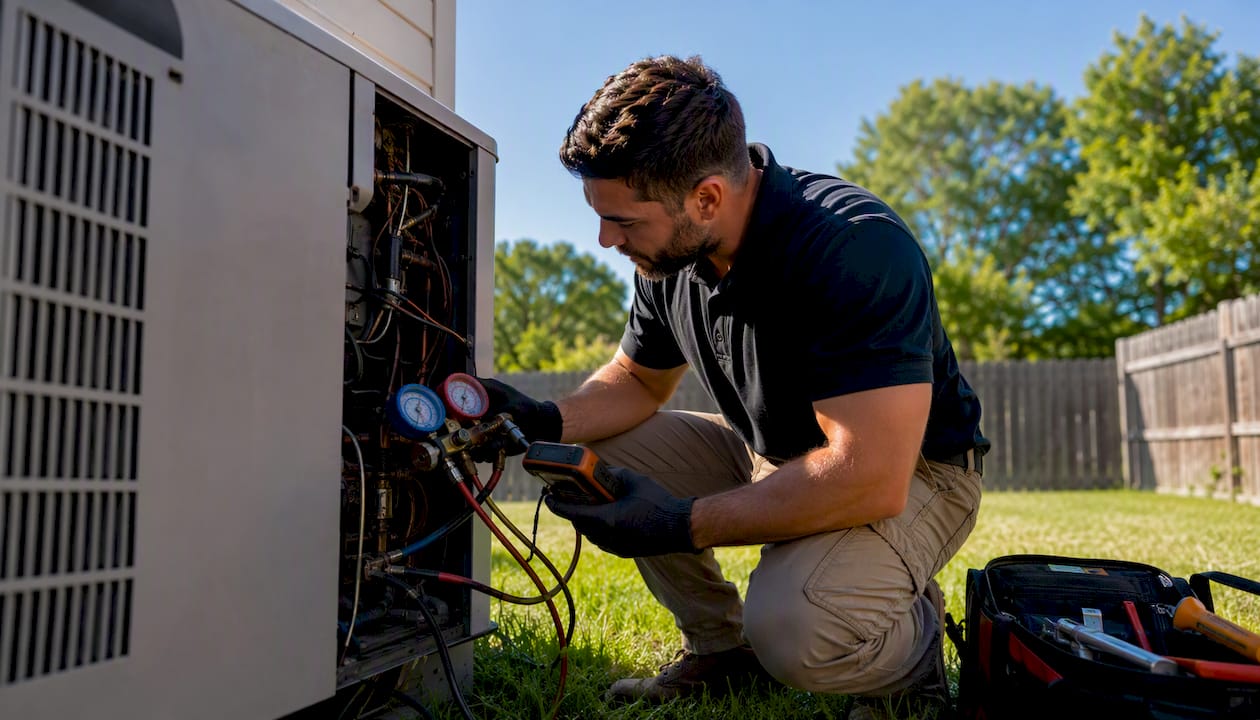
A standard HVAC tune-up runs $75–$200 per visit for most homes, and annual service plans that bundle two visits typically cost $150–$350 per year. If you’re paying outside that range, you need a reason.
Here’s the short version: pay-per-visit works fine for newer systems in good shape. Once your equipment is past five years old, or you’re running multiple systems, a service plan usually saves money over two or three years, especially when you factor in diagnostic-credit waivers and priority scheduling.
Start here:
- Schedule a shoulder-season tune-up (March–April for AC, September–October for furnace) to avoid peak-demand surcharges
- Check and replace your air filter before the technician arrives — it signals you’re an informed customer
- Get written quotes from at least two local providers before booking
- Ask whether the diagnostic fee is credited toward any repair done the same day
Pro Tip: Ask every provider for their written tune-up checklist before scheduling. If they can’t produce one, that’s your answer.
Key Takeaways
Routine HVAC maintenance costs $75–$350 per visit depending on system type and market, with annual service plans typically running $150–$500 and paying for themselves after one repair call.
| Point | Details |
|---|---|
| Per-visit cost range | Most residential tune-ups run $75–$200; commercial RTU visits run $100–$500 per unit. |
| Annual plan value | Plans at $150–$350/year make financial sense for systems older than five years or multi-system homes. |
| Schedule timing | Book in March–April (AC) or September–October (furnace) to avoid peak-season surcharges of 10–20%. |
| Vendor checklist | Verify license, request a written tune-up checklist, and confirm whether the diagnostic fee is credited toward repairs. |
| Local AI Page | Search by ZIP code on Local AI Page to compare claimed HVAC profiles with licensing, reviews, and direct contact details. |
This article is general information, not a substitute for advice from a qualified financial advisor. Consult a qualified financial professional about your own circumstances before acting on anything here.
Table of Contents
- How much does HVAC maintenance cost?
- What does maintenance cost for your specific system?
- What does a tune-up actually include?
- What do service calls and repairs actually cost?
- What factors push your HVAC service price up or down?
- How often should you schedule HVAC maintenance?
- Why routine maintenance is worth the money
- How to find and compare local HVAC providers
- The case for service plans over pay-per-visit
- Find local HVAC pros without the guesswork
- Sources
How much does HVAC maintenance cost?
The range is wide because “HVAC maintenance” covers everything from a 45-minute AC checkup to a full commercial rooftop unit inspection. Today’s Homeowner puts the per-visit range at $100–$350, with premium annual plans reaching $500 for multi-system or commercial coverage.
Here’s how the tiers break down in practice:
- Low end ($75–$100): Promotional pricing from national retailers or new-customer specials. Often a basic filter check and visual inspection. Repairs and refrigerant work are always extra.
- Typical ($100–$200): A full tune-up with coil cleaning, electrical checks, and a system run test. This is what most single-family homeowners pay.
- High end ($200–$350+): Older systems, specialty refrigerants, hard-to-access equipment, or markets with elevated labor costs (Northeast, West Coast).
Three scenarios that illustrate where you’ll likely land:
Newer single-family home, central AC, mid-Atlantic region: One spring AC tune-up at $120–$150. Annual cost with a fall furnace visit: $240–$300 pay-per-visit, or $175–$250 on a bundled plan.
Older home (15+ years), gas furnace plus central AC, Midwest: Expect $150–$200 per visit due to age-related complexity. A service plan at $250–$350 per year makes sense here because the diagnostic-credit waiver alone can offset the premium after one repair call.
Small business, single rooftop unit (RTU): The Cooling Company reports $100–$500 per RTU visit depending on tonnage. Budget $400–$800 annually for two visits on a 5-ton unit.
Annual service plans often include perks that pure price math misses: diagnostic-credit waivers, priority scheduling, and parts discounts can tip the value calculation if you expect even one repair call over a two-to-three year window.
What does maintenance cost for your specific system?
System type is the single biggest variable after labor market. A mini-split head takes 30–45 minutes; a packaged rooftop unit can take two hours or more.
| System type | Typical per-visit cost | Annual cost (visits/year) | What’s usually included | Common extra charges | Best for |
|---|---|---|---|---|---|
| Central AC | $75–$175 | $150–$350 (2x/year) | Coil clean, filter, refrigerant check, electrical | Refrigerant top-off, capacitor | Residential |
| Gas furnace | $80–$175 | $80–$175 (1x/year) | Heat exchanger check, burner clean, filter, flue | Combustion analysis, belt | Residential |
| Heat pump | $100–$200 | $200–$400 (2x/year) | Both heating and cooling checks, refrigerant, defrost | Reversing valve, refrigerant | Residential/light commercial |
| Mini-split (per head) | $75–$150 | $75–$300 (1–2x/year) | Coil clean, filter, drain, electrical | Additional heads, refrigerant | Residential/small commercial |
| Packaged RTU | $150–$500 | $300–$800 (2x/year) | Full mechanical inspection, coil, controls, filters | Economizer, refrigerant, belts | Commercial |
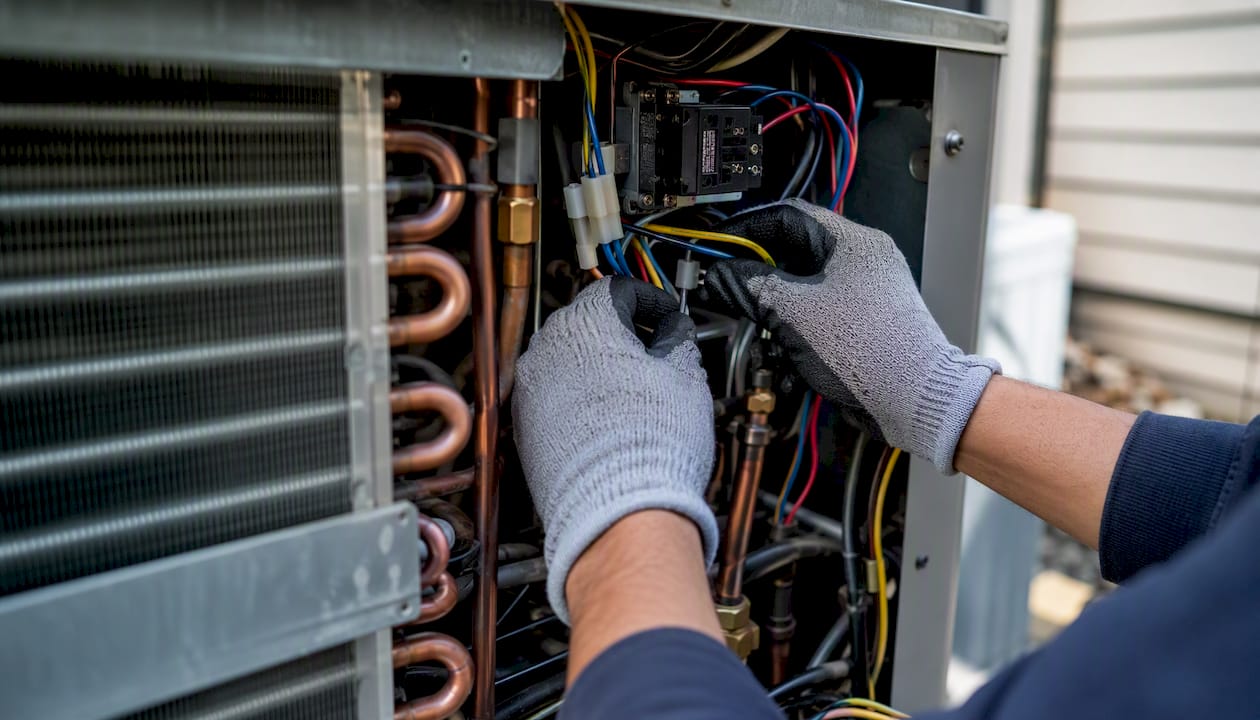
This Old House confirms the $75–$200 residential range and notes that system-specific complexity is the primary driver of variance within that band.
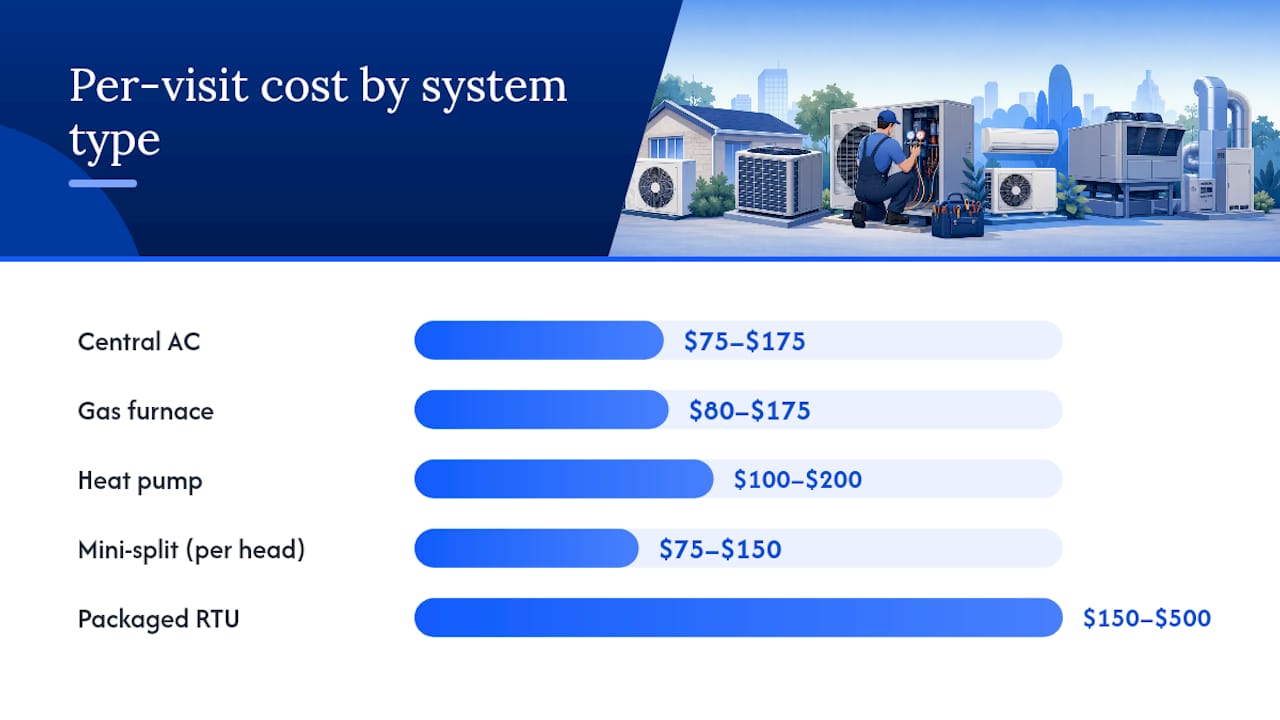
A few notes on timing and access. Heat pumps need two visits per year because they handle both heating and cooling seasons. Mini-splits with multiple heads are priced per head, so a four-head system at $100 per head runs $400 for a single visit. Rooftop units on commercial buildings often require ladder access and two-technician crews, which is why the RTU range starts where residential ends.
What drives cost within a system type:
- Age (older systems need more inspection time and are more likely to surface repair needs)
- Refrigerant type (R-22 systems cost more to service; R-410A and R-32 are more accessible)
- Access difficulty (attic, crawlspace, or rooftop placement adds labor time)
- Number of zones or air handlers
What does a tune-up actually include?
A legitimate maintenance visit covers a specific set of tasks. ENERGY STAR’s maintenance checklist is the clearest public reference for what technicians should perform. Use it to verify any written checklist a provider sends you.
Standard tasks on a proper tune-up:
- Filter inspection and replacement (or cleaning for washable filters)
- Evaporator and condenser coil cleaning
- Condensate drain flush and pan inspection
- Electrical connection tightening and voltage/amperage checks
- Capacitor and contactor inspection
- Refrigerant pressure check (not a top-off — just a pressure reading)
- Thermostat calibration and operation test
- Full system run test under load
Common extras that raise the bill:
- Refrigerant top-off or reclaim ($50–$150+ depending on type and quantity)
- Capacitor replacement ($150–$400 parts and labor)
- Contactor replacement ($100–$300)
- Inducer motor replacement ($300–$600)
- Belt replacement on older systems ($50–$150)
- Combustion analysis for gas furnaces ($50–$100 as an add-on)
The extras aren’t inherently a problem. A capacitor that’s reading weak on a meter genuinely needs replacing. The issue is when a technician recommends three add-ons on a system that’s running fine, with no meter readings to show you.
Pro Tip: A thorough tune-up takes 60–90 minutes. If a technician is done in 20 minutes, ask to see the readings from the refrigerant gauges and the electrical checks. No readings means no checks.
What do service calls and repairs actually cost?
Maintenance visits and repair calls are priced differently. A trip/dispatch fee runs $75–$175; flat service calls (dispatch plus first-hour labor) commonly fall in the $150–$250 range. Hourly rates after the first hour run $80–$180 depending on market. After-hours and weekend calls typically carry a 1.5× to 2× multiplier on labor.
| Repair job | Typical time | Expected all-in cost |
|---|---|---|
| Capacitor replacement | 30–45 min | $150–$400 |
| Contactor replacement | 30–45 min | $100–$300 |
| Refrigerant top-off (R-410A) | 30–60 min | $100–$350 |
| Blower motor replacement | 1–2 hours | $300–$500 |
| Inducer motor replacement | 1–2 hours | $300–$600 |
| Compressor replacement | 3–6 hours | $1,500–$2,800 |
Watch for these invoice patterns: a “system inspection fee” charged on top of a diagnostic fee for the same visit; refrigerant added without showing you gauge readings before and after; parts listed at 3× retail without a disclosed markup policy. Ask for a written quote before any repair starts, and confirm whether the diagnostic fee is credited if you approve the work.
Home Depot and national service brands commonly advertise promotional tune-ups starting near $99. Those prices are real, but they exclude repairs, refrigerant, and often filter replacement. They’re a reasonable entry point if the technician is licensed and the checklist is written down. They’re a problem if the low price is the hook for upselling repairs you don’t need.
What factors push your HVAC service price up or down?
Most of the variables fall into two buckets: things you can control and things you can’t.
Factors you can’t change:
- Regional labor rates (Northeast and West Coast markets run 15–25% above national averages; rural markets often run lower but with fewer provider options)
- Peak-season demand (summer AC calls and winter furnace calls can carry 10–20% surcharges)
- System age and refrigerant type (older R-22 systems cost more to service because the refrigerant itself is expensive and technicians need additional certification)
Factors you can influence:
- Scheduling in shoulder seasons (March–April, September–October) to avoid peak pricing
- Bundling AC and furnace visits into a single annual plan to eliminate a second trip fee
- Keeping the area around outdoor units clear and filters changed, which shortens visit time
- Choosing a provider with a transparent parts markup policy upfront
System complexity and home size are primary cost drivers, per Today’s Homeowner: larger homes with more ductwork and older or specialized systems require more labor. A 4,000-square-foot home with a 20-year-old gas furnace and a separate whole-home humidifier is a longer job than a 1,500-square-foot condo with a five-year-old heat pump.
When getting quotes, ask each provider: “What specifically takes longer or costs more on my system?” A technician who can answer that question in concrete terms is one who’s actually looked at your equipment type, not just quoted a flat rate.
How often should you schedule HVAC maintenance?
The standard schedule for most homes is two professional visits per year: one in spring for the cooling system, one in fall for the heating system. That said, system type and use case shift the math.
- Central AC (residential): Once per year, ideally March–April before cooling season starts.
- Gas or oil furnace (residential): Once per year, ideally September–October before heating season.
- Heat pump (residential): Twice per year, since it handles both seasons. Spring and fall visits are both necessary.
- Mini-split systems: Once per year per head for light use; twice per year for systems running year-round or in high-humidity climates.
- Commercial RTUs: Twice per year at minimum; high-use facilities or food service environments often warrant quarterly inspections.
- DIY tasks between visits: Check and replace filters every 1–3 months, clear debris from outdoor units monthly during active seasons, and flush condensate drain lines with diluted bleach once per season.
Scheduling in shoulder seasons isn’t just about price. Technicians are less rushed, appointment windows are shorter, and you’re not competing with emergency calls from neighbors whose AC failed on the hottest day of July.
Pro Tip: If you have both a furnace and a central AC, ask your provider whether they’ll bundle both seasonal visits into a single annual plan. You’ll typically save one trip fee, and the technician can flag cross-system issues in a single visit.
Why routine maintenance is worth the money
The ROI case for regular HVAC maintenance is straightforward. A well-maintained system uses less energy, breaks down less often, and lasts longer. HVAC Base notes that maintenance reduces energy waste and emergency repairs, contributing to positive ROI over time.
Where the savings show up:
- Energy efficiency: A dirty coil or low refrigerant charge forces the system to run longer to hit the same temperature. Regular cleaning and pressure checks keep efficiency close to the manufacturer’s rated SEER or AFUE rating.
- Avoided emergency repairs: Capacitors, contactors, and belts fail with warning signs a technician can catch during a tune-up. Catching a weak capacitor at $200 beats a compressor failure at $1,500–$2,800.
- Equipment lifespan: A properly maintained central AC or furnace typically lasts 15–20 years. Neglected systems often need replacement at 10–12 years.
- Warranty compliance: Most equipment manufacturers require documented annual maintenance to keep the warranty valid. Skipping a year can void coverage on a compressor or heat exchanger that costs thousands to replace.
Regular preventive work also reduces the kind of emergency breakdowns that equipment cleaning and maintenance help prevent in commercial settings — the same principle applies to residential HVAC.
How to find and compare local HVAC providers
Getting an accurate quote comes down to asking the right questions before you book, not after.
Step-by-step checklist:
- Verify the contractor holds a current state HVAC license and carries general liability plus workers’ compensation insurance. Ask for the license number and look it up on your state’s contractor licensing board.
- Check Google reviews, the Better Business Bureau, and any platform-verified reviews for patterns (not just star averages). Look for mentions of upselling, no-show appointments, and whether written quotes were honored.
- Request a written tune-up checklist before booking. It should match the ENERGY STAR standard tasks. If the provider won’t send one, move on.
- Ask how diagnostic fees are handled: is the fee credited toward a repair if you approve work the same day?
- Confirm the parts markup policy. Some shops charge 2–3× retail on parts; others work on a flat labor rate with retail parts pricing. Know which model you’re dealing with.
- Ask about emergency and priority scheduling. Service plan members often get same-day or next-day priority; pay-per-visit customers may wait three to five days during peak season.
Questions to ask on the phone:
- “What’s included in your tune-up, and can you email me the checklist?”
- “Is your diagnostic fee credited toward repairs?”
- “Do you offer a service plan, and what does it include beyond the two visits?”
- “What’s your after-hours rate if I need an emergency call?”
Use Local AI Page’s HVAC provider search to find claimed business profiles in your area. Claimed profiles include service areas, licensing details, FAQs, and direct contact information, so you can compare two or three providers side by side before making a single call. Search by ZIP code at Localaipage to pull up verified local options.
The case for service plans over pay-per-visit
The conventional wisdom says “just pay per visit if your system is new.” That’s often right, but it misses a subtler point: the value of a service plan isn’t just the two tune-ups. It’s the diagnostic-credit waiver, the priority scheduling, and the parts discount that change the math when something goes wrong.
A homeowner with a seven-year-old heat pump paying $150 per visit twice a year spends $300 annually. A service plan at $250 per year covers both visits and waives the $100–$175 diagnostic fee on any repair call. One repair call per year and the plan pays for itself. Two repair calls and it’s clearly the better deal.
Small-business owners running commercial RTUs face a sharper version of this calculation. A rooftop unit failure during a heat wave isn’t just a repair bill; it’s lost productivity, potential inventory damage, and a service call that competes with every other emergency in the market. Priority scheduling alone is worth paying for.
The counterargument is real: if your system is under five years old, under manufacturer warranty, and in a mild climate, pay-per-visit is probably fine. But the moment you’re outside warranty or running equipment that’s approaching the end of its expected life, a plan with diagnostic waivers and priority access changes the risk profile meaningfully.
Find local HVAC pros without the guesswork
Budgeting for HVAC service is easier when you can compare real providers, not just price ranges from a national guide. Local AI Page connects you directly with local HVAC contractors through a ZIP code search, showing you claimed business profiles with service areas, licensing details, customer reviews, and direct contact information.

Search local HVAC providers by ZIP code and pull up two or three profiles side by side. Check whether each contractor lists their tune-up checklist, their service plan terms, and their emergency availability. Then contact them directly to request written quotes. That’s the process that gets you an accurate local price, not a national average.
Sources
- HVAC Maintenance Cost: Tune-Up Pricing Guide (2026) | HVAC Base
- How Much Does HVAC Maintenance Cost? (2026) | Today’s Homeowner
- Energystar
- What Does HVAC Maintenance Cost? - This Old House
- HVAC service call cost in 2026: $100–$250 + hourly
- HVAC Maintenance Cost: Complete Guide & Price Ranges | The Cooling Company