
What Homeowners Actually Pay for Lawn Care in 2026
What Homeowners Actually Pay for Lawn Care in 2026
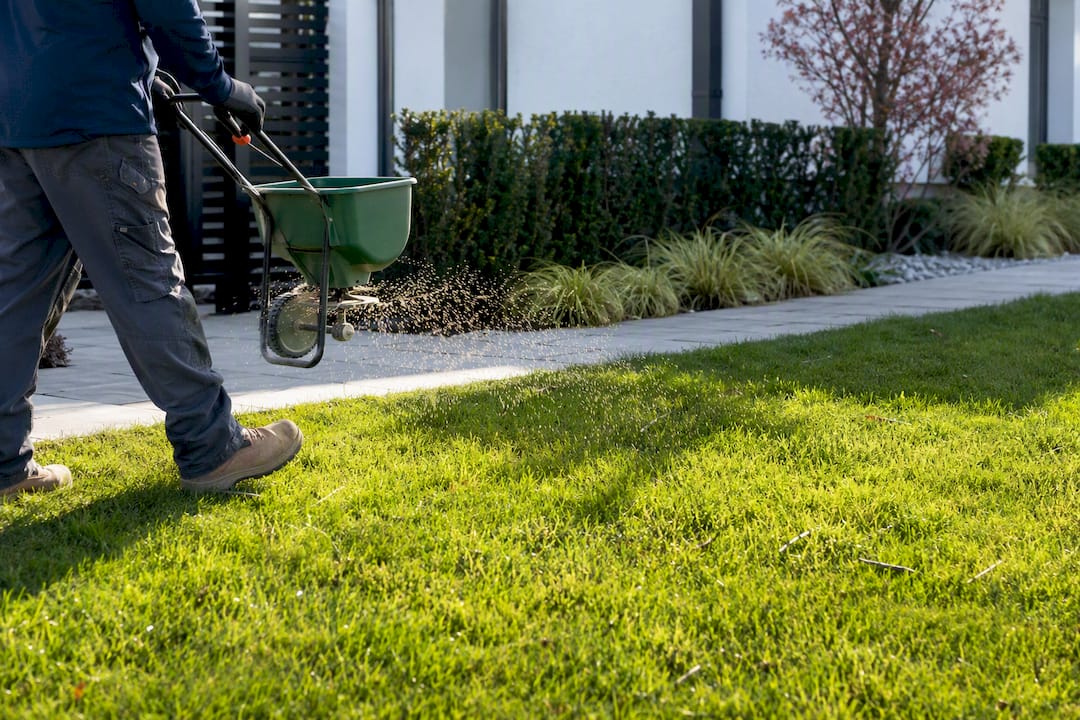
For a standard 5,000 sq ft lawn, expect to pay around $46 per mow visit and roughly $1,621 for a full professional season, which works out to about $232 a month across a seven-month, 20-visit growing season. That’s the national middle. Homeowners doing everything themselves typically spend closer to $338 a year on fuel, seed, and fertilizer.
- Per-visit mowing: $40–$80 nationally, averaging around $46–$55
- Full-service monthly (peak season): $120–$450
- Annual professional program (5,000 sq ft): roughly $1,400–$1,960 depending on region
- Labor’s share of the bill: the single biggest line item in almost every quote
Quick stat check: the national per-visit average sits near $46 to $55, while full-service monthly costs run $120 to $450 during peak season. Your fastest path to an accurate number: measure your lawn’s square footage, then plug your ZIP code into a local search to see what providers near you actually charge.
Key Takeaways
Lawn care cost depends primarily on service scope and labor, not lawn size alone, so a 5,000 sq ft lawn typically runs $1,621 a year for full professional service.
| Point | Details |
|---|---|
| National per-visit benchmark | Expect $40–$80 per mow, averaging around $46–$55 nationally. |
| Full-season budgeting | A 5,000 sq ft lawn runs about $1,621 a year, or $232 a month across a 20-visit season. |
| Hybrid saves the most | DIY mowing plus 4–5 pro treatments often lands near $700–$900 a year. |
| Regional swings are real | Expect roughly $1,408 in the Southeast versus $1,959 on the West Coast for the same lawn size. |
| Localize before you commit | Search your ZIP code on Local AI Page to compare real local provider pricing against these national benchmarks. |
Table of Contents
- What Does Lawn Care Cost by Service Type?
- How Does Lawn Size Change the Price?
- Why Does Lawn Care Cost So Much More in Some Regions?
- How Do You Turn a Per-Visit Price Into a Monthly or Annual Budget?
- Is DIY Lawn Care Actually Cheaper Than Hiring a Pro?
- How Do Contractors Actually Calculate Their Prices?
- What Makes One Lawn Cost More to Maintain Than Another?
- How Can You Lower Your Lawn Care Bill Without Cutting Corners?
- How Were These Lawn Care Cost Estimates Calculated?
- How Do You Estimate Your Own Total Annual Lawn Care Cost?
- What Happens When Lawn Care Goes Beyond Routine Maintenance?
- Our Take on Getting the Most From Your Lawn Care Budget
- Find Local Lawn Care Pros Who Match Your Budget
- Frequently Asked Questions About Lawn Care Cost
- Sources
What Does Lawn Care Cost by Service Type?
Mowing gets all the attention because it happens most often, but it’s rarely the biggest expense over a full year. Once you add fertilization, weed control, aeration, and seasonal cleanup, the total bill shifts fast.
Here’s how the major services typically break down, based on national averages compiled across pricing calculators and industry data:
Most “full-service” packages bundle mowing, trimming, and edging into a flat recurring rate, then treat fertilization, aeration, weed control, and seeding as add-ons billed separately, even when a provider quotes them as part of an annual plan. That’s worth asking about directly, because two quotes advertised as “full service” can cover very different scopes.
A few things worth knowing before you compare quotes line by line:
- Aeration pricing depends heavily on method: core aeration typically costs more than liquid aeration but tends to produce better long-term soil results.
- Sod and major seeding jobs are usually quoted separately from a recurring maintenance contract, not folded into monthly pricing.
- Cleanup services (leaf removal, storm debris, dethatching) often carry disposal fees that don’t show up until the invoice arrives.
- A provider like TruGreen markets fertilization and weed control as standalone annual plans, while local independent crews often quote them per visit. Comparing apples to apples means asking exactly what’s included before signing anything.
How Does Lawn Size Change the Price?
Price doesn’t scale in a straight line with square footage, and that surprises a lot of first-time buyers. A tiny lot can cost almost as much per visit as a mid-size one because a crew’s setup, loading, and drive time stay roughly fixed no matter how small the job is.
- 1,000 sq ft lawn: Expect to pay close to the same per-visit minimum as a larger property, often $35–$50, since travel and equipment loading dominate the cost.
- 5,000 sq ft lawn: This is the benchmark size most calculators use. Expect $46–$55 per mow and roughly $1,621 a year for full professional service.
- 10,000 sq ft lawn (about a quarter acre): Per-visit pricing climbs to $65–$100, but the per-square-foot rate usually drops because the crew is already on-site.
Pricing per square foot for mowing typically runs $0.01 to $0.05 depending on lot size, with larger properties often priced by the acre instead of a flat visit rate once you pass half an acre or so. Beyond about a half acre, most contractors switch entirely from flat-rate visits to acreage-based or hourly pricing, since crew time becomes the real cost driver rather than a standard route stop.
- Small lots (under 2,000 sq ft): expect a per-visit minimum charge regardless of actual mowing time.
- Mid-size lots (3,000 to 8,000 sq ft): this is where national averages apply most cleanly.
- Large lots (over 10,000 sq ft): ask for acreage or hourly pricing, not a flat per-visit quote.
Why Does Lawn Care Cost So Much More in Some Regions?
Where you live changes the math more than almost any other factor. Labor rates, growing season length, and how densely packed a provider’s route is all move the number, sometimes by hundreds of dollars a year.
- West Coast: Higher costs overall, with modeled annual professional spending near $1,959 for a 5,000 sq ft lawn, driven by longer growing seasons and higher regional wages.
- Southeast: Lower annual totals, closer to $1,408, partly because labor costs run lower and route density is often higher in suburban markets.
- Northeast: Shorter growing season compresses more visits into fewer months, which can push monthly costs up even when the annual total lands near average.
- Midwest: Generally tracks close to the national average, with seasonal spikes around spring cleanup and fall aeration.
- Southwest: Water restrictions and drought-tolerant landscaping trends are shifting some markets toward xeriscaping quotes instead of traditional turf pricing.
The gap between regions often comes down to season length more than the per-visit rate itself. A Phoenix lawn might get mowed nearly year-round at a moderate per-visit price, while a Minneapolis lawn pays a similar rate but crams all its visits into six months, concentrating cash flow into a shorter window.
National averages are a starting point, not a quote. Running a ZIP-based search pulls in what providers actually charge in your specific market, which matters more than any national figure once you’re ready to book.
How Do You Turn a Per-Visit Price Into a Monthly or Annual Budget?
The math is simpler than most homeowners expect, and you can do it with a calculator and two numbers: your per-visit rate and your season length.
The formula: (per-visit price × visits per season) ÷ months in season = average monthly cost.
Here’s how that plays out for a typical 5,000 sq ft lawn on a 20-visit, seven-month season:
- Start with a per-visit rate of $46, which is the national average for a lawn this size.
- Multiply by 20 visits (a standard April-through-October mowing schedule): $46 × 20 = $920 for mowing alone.
- Add seasonal treatments like fertilization and weed control (roughly $400–$500 for four to six applications), bringing the annual total to around $1,621.
- Divide by seven months of active service: $1,621 ÷ 7 ≈ $232 per month during the growing season.
Add treatments to a mowing-only budget and the full-service monthly average lands between $120 and $450, depending on how many extras you bundle in and where you live.
Is DIY Lawn Care Actually Cheaper Than Hiring a Pro?
On paper, yes. DIY materials for a 5,000 sq ft lawn run about $338 a year, roughly a fifth of the $1,621 full-service professional cost. But that comparison hides the real question: what’s your time worth?

Labor typically makes up the majority of what you pay a professional crew, which is exactly why the DIY-only number looks so much smaller. You’re not avoiding the cost of fertilizer and gas: you’re avoiding the cost of someone else’s time. Grounds maintenance labor rates track wage data the Bureau of Labor Statistics publishes, and those figures explain why quotes vary so much by region and season.
A rough breakeven rule: if mowing takes you 45 minutes a week and you’d otherwise pay $12–$15 an hour to have it done, ask whether that time is worth more to you doing something else. For most homeowners, mowing is where DIY makes the most financial sense, since it’s simple, repetitive, and doesn’t require special timing.
Treatments are a different story. Fertilization, weed control, and aeration depend on timing precision and product knowledge that’s easy to get wrong. A common hybrid approach: mow it yourself, hire a pro for four to six seasonal treatments a year. That combination often lands closer to $700–$900 annually, well below full-service pricing while still getting professional timing on the parts of lawn care where mistakes are expensive.
Pro Tip: If you’re on the fence, price out just the treatments you’d struggle to time correctly, like pre-emergent weed control, and DIY everything else. You’ll capture most of the savings without gambling on the parts that actually require expertise.
How Do Contractors Actually Calculate Their Prices?
Every contractor quote starts with a version of the same formula, whether they say it out loud or not: (minutes on-site ÷ 60) × hourly target + travel + materials + margin.
- Minutes on-site: How long the crew actually spends mowing, trimming, and cleaning up.
- Hourly target: The rate that covers wages, equipment amortization, fuel, and insurance.
- Travel time: Added cost if your property sits outside their normal route density.
- Materials: Fertilizer, seed, or chemicals used that visit.
- Margin: Profit built on top, often the smallest line item despite what homeowners assume.
Professional operators frequently set a “true cost floor” per visit covering fuel, equipment, and minimum labor before route density and travel adjust the final number up or down.
When you’re comparing quotes, ask for these details in writing:
- Exact services included per visit, not just “mowing” or “full service”
- Whether disposal fees, trip charges, or fuel surcharges apply
- Proof of insurance and any relevant licensing
- Start date, contract length, and cancellation terms
Red flags worth walking away from: a quote dramatically below every competitor’s, a vague scope with no line-item breakdown, no proof of insurance, or a refusal to put anything in writing. Underpriced bids often signal an uninsured or under-equipped operator, which can cost you more later if something goes wrong on your property.
What Makes One Lawn Cost More to Maintain Than Another?
Two lawns the same size can get wildly different quotes, and it usually comes down to how much time and difficulty the crew expects, not just square footage.
- Slope and terrain: Steep grades slow mowing and increase equipment wear, which shows up in the quote.
- Obstacles: Trees, garden beds, playsets, and fencing all add trimming time that flat, open lawns don’t require.
- Access: Locked gates, narrow side yards, or no direct truck access add setup minutes to every single visit.
- Debris and cleanup: Storm damage, heavy leaf drop, or pet waste extend service time before mowing even starts.
- Seasonality: Spring cleanup and fall aeration create predictable spikes in your annual bill even if your weekly rate stays flat.
Watch for disposal fees on cleanup jobs, one-time trip charges for irregular scheduling, and fuel surcharges some providers add during price spikes. None of these show up in a base quote, but they add up fast over a season.
How Can You Lower Your Lawn Care Bill Without Cutting Corners?
A few practical moves can meaningfully shrink your annual spend:
- Bundle services into an annual contract rather than booking treatments one at a time; providers often discount for guaranteed volume.
- Go hybrid: mow it yourself, hire pros only for fertilization, weed control, and aeration.
- Book off-season for aeration or overseeding when crews have open schedule slots and are more willing to negotiate.
- Team up with neighbors so a provider can service multiple properties on the same street in one trip.
- Clear the yard before service day: move toys, trim back overgrown beds, and pick up debris so the crew isn’t billing you for cleanup time.
Pro Tip: Ask your provider what day they already service your street. Aligning your schedule with their existing route can shave real money off the quote, since you’re not asking them to make a special trip just for you.
How Were These Lawn Care Cost Estimates Calculated?
These figures use a standardized 5,000 sq ft lawn, a seven-month growing season, and 20 mowing visits as the baseline, matching how most national calculators model a typical suburban yard.
- Per-visit and annual benchmarks are pulled from multiple pricing calculators and cross-checked against reported national averages.
- Labor cost context comes from Bureau of Labor Statistics wage data for grounds maintenance occupations.
- Regional adjustments reflect reported West Coast and Southeast variations rather than a single flat national number.
- Your actual quote can differ meaningfully based on lawn complexity, local labor rates, and provider route density, so treat these as planning benchmarks, not guaranteed prices.
How Do You Estimate Your Own Total Annual Lawn Care Cost?
Start with your actual square footage, not a guess. Walk the perimeter or check your property survey, since even a 20% size error throws off every downstream calculation. Multiply by the appropriate per-visit range for your size category, then decide how many of the six major service types your lawn actually needs.
A thin, weed-free lawn in good soil might only need mowing and one or two fertilization rounds a year, landing closer to $900–$1,100 annually. A lawn recovering from neglect, drought, or heavy weed pressure often needs the full stack: aeration, overseeding, multiple weed control applications, and more frequent mowing during recovery, which can push the annual total past $2,000.
Be honest about your goals. If you want a golf-course-quality lawn, budget for six or more fertilizer and weed control applications a year plus annual aeration. If your goal is simply “green and mowed,” a lighter three-to-four treatment plan covers most of what you need. Write down your lawn’s current condition, your target look, and your square footage before requesting quotes. That prep work alone will make every contractor conversation faster and more accurate.
What Happens When Lawn Care Goes Beyond Routine Maintenance?
Routine budgets don’t cover emergencies, and they hit harder than most homeowners expect. Grub damage, fungal outbreaks, or a summer drought that kills large patches can mean $500–$1,500 in emergency renovation, well above your normal seasonal spend.
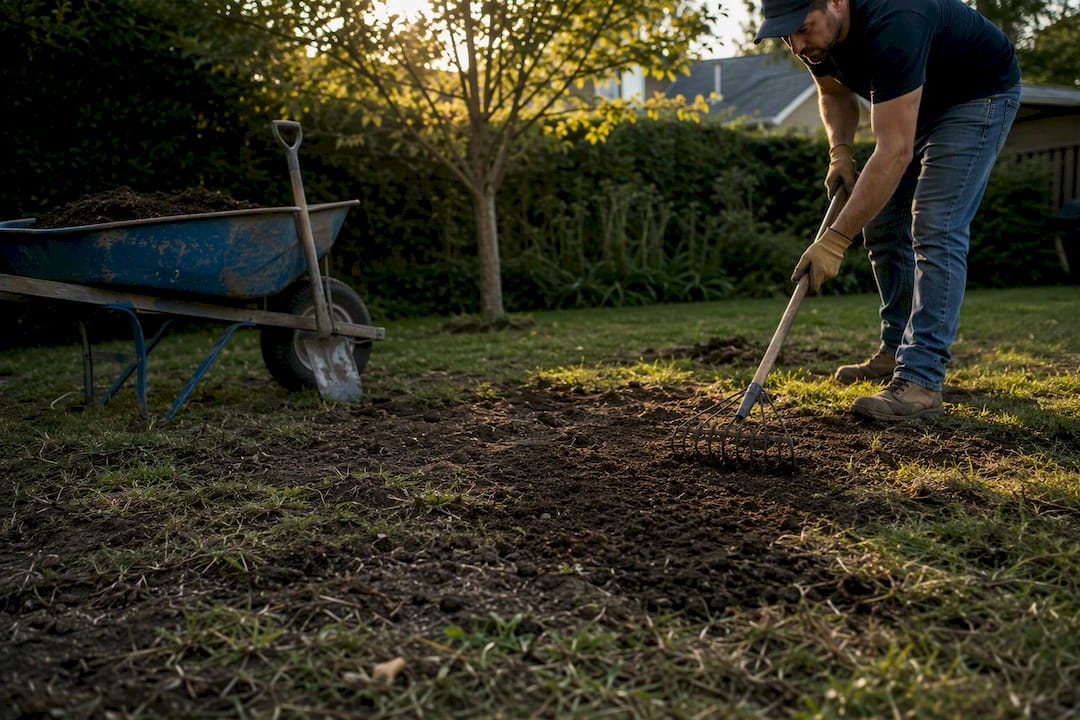
Storm damage is the most common unplanned cost. A fallen limb that shreds a section of turf, or flooding that washes out topsoil, often requires regrading and resodding, which runs $1–$2 per square foot for the affected area alone. Irrigation system failures during peak summer heat can also force emergency watering services or rapid reseeding to prevent total die-off.
If you never use it, it rolls into next year’s aeration or overseeding. If you do need it, you’re not scrambling to find $800 in July because a grub infestation took out half your backyard.
Our Take on Getting the Most From Your Lawn Care Budget
Most homeowners overspend by defaulting to a full-service contract when a hybrid plan would do the job for less. Mowing is where DIY makes the most sense financially. Treatments are where professional timing earns its cost, especially anything tied to a narrow application window like pre-emergent weed control.
Search by ZIP code before signing anything. Local providers on Local AI Page list services, service areas, and direct contact details, making it easy to compare real local pricing against the national benchmarks in this guide.
Find Local Lawn Care Pros Who Match Your Budget
National averages tell you what to expect. They don’t tell you what the crew three streets over actually charges, or whether they have room on their route for your lawn. Local AI Page closes that gap with a ZIP-based search that pulls up real local providers, not a generic national estimate.

Search your ZIP and you’ll see verified business profiles with service areas, listed offerings, customer reviews, and direct contact information, everything you need to compare a quote against what this guide walked through. Some providers list recurring maintenance schedules similar to the plans described here; others focus on one-off treatments like aeration or seasonal cleanup. Local AI Page shows you both, so you can build the exact hybrid plan that fits your lawn and your budget.
Head to Local AI Page’s ZIP search and pull up the providers servicing your neighborhood today. Compare two or three quotes against the benchmarks above, and you’ll know within minutes whether you’re getting a fair price.
Frequently Asked Questions About Lawn Care Cost
What is the average lawn care cost per month? Most homeowners pay between $120 and $450 a month during peak growing season, depending on lawn size, region, and how many treatments are bundled into the service.
How much does lawn care cost per visit? A basic mow and trim typically runs $40 to $80 per visit, with the national average landing around $46 to $55 for a mid-size residential lawn.
Is it cheaper to do lawn care yourself? DIY materials alone cost roughly $338 a year for a 5,000 sq ft lawn, far less than the $1,621 average for full professional service, but that gap reflects labor cost, not just supplies.
What is the biggest factor in lawn treatment expenses? Labor consistently makes up the largest share of a professional quote, which is why property access, obstacles, and travel time move the price more than materials do.
How much extra should I budget for lawn emergencies?
Sources
- Free Lawn Mowing Cost Calculator: Per-Visit + Annual Prices
- Lawn Care Pricing Chart (2026) + Free Cost Calculator – Invoice Fly
- Lawn Care Cost Calculator — 2026 Mowing, Fertilizer & Weekly Service Prices
- Occupational Outlook Handbook: Grounds maintenance workers