
How to Respond to Reviews: Templates and Playbook
How to Respond to Reviews: Templates and Playbook

Reply to every meaningful review within 24–48 hours, use the reviewer’s name, reference one specific detail from their feedback, and move any real resolution offline. That three-part habit, done consistently, does more for your reputation than any rating-improvement campaign. The public/offline split matters: your reply is written for the next hundred readers, not just the one reviewer.
Three ready-to-post templates you can use right now:
-
Positive (5★): “Thank you, [Name]! We’re so glad [specific detail, e.g., ‘the installation went smoothly’] made your day. We’d love to see you again, and please send any friends our way.”
-
Neutral/Mixed (3★): “Thanks for the honest feedback, [Name]. We’re glad [positive detail] worked well, and we hear you on [issue]. Please reach out to us at [phone/email] so we can make it right.”
-
Negative (1–2★): “We’re sorry to hear about your experience, [Name]. This isn’t the standard we hold ourselves to. Please contact us directly at [phone/email] so we can resolve this for you personally.”
Key Takeaways
Responding to reviews consistently, quickly, and with specific personalization is the single most effective reputation habit a local business can build.
| Point | Details |
|---|---|
| Reply to 1–3★ reviews first | Cover 100% of negative reviews within 24–48 hours before addressing positive ones. |
| Personalize every reply | Use the reviewer’s name and reference one specific detail; generic replies signal indifference. |
| Move resolutions offline | Direct complex issues to a phone number or email in the public reply; never negotiate publicly. |
| Ask for updates after resolution | Once a customer confirms satisfaction, politely invite them to update their review — no incentives, no pressure. |
| Localaipage keeps contact info accurate | A verified Localaipage listing ensures the phone and email in your replies always reach the right person. |
Table of Contents
Ready-to-use review response templates for every situation
The fastest way to build a consistent reply habit is a template library organized by star rating. The templates below are fill-in-the-blank. Swap the bracketed fields for real details before posting.
5-star review templates
Short (under 30 seconds): “[Name], thank you! Hearing that [specific detail] made your experience great means a lot to us. We look forward to seeing you again soon.”
Medium: “Thank you so much, [Name]! We’re thrilled that [specific detail, e.g., ‘our team got the job done ahead of schedule’] hit the mark. Reviews like yours keep us motivated. Come back anytime, and feel free to refer a friend.”
Extended (employee recognition): “[Name], this review made our whole team’s day. We’ll pass your kind words along to [employee name], who handled your [service type]. We take pride in [specific quality, e.g., ‘showing up on time and cleaning up after ourselves’], and it’s great to know it shows. Thank you for trusting us.”
4-star review templates
Short: “Thanks, [Name]! We’re glad [positive detail] worked well for you. If there’s anything we can do better next time, don’t hesitate to let us know.”
Medium: “[Name], thank you for the thoughtful review. We’re happy [positive detail] met your expectations. We noted your comment about [minor issue] and will use it to improve. Hope to serve you again soon.”
3-star (neutral/mixed) templates
Short: “Thanks for the honest feedback, [Name]. We’re glad [positive detail] landed well. Please reach out at [contact] so we can address [issue] directly.”
Medium: “[Name], we appreciate you taking the time. It’s great to hear [positive detail] worked for you. We’re sorry [specific issue] fell short. Our team would love a chance to make it right — please call or email us at [contact info].”
2-star templates
Short: “[Name], we’re sorry this wasn’t the experience you deserved. Please contact us at [phone/email] so we can look into what happened and fix it.”
Medium: “Thank you for letting us know, [Name]. We take [specific issue] seriously and want to understand exactly what went wrong. Please reach out at [contact] — we’d like to make this right for you.”
1-star templates
Short: “[Name], we sincerely apologize. Please contact us at [phone/email] so we can address this directly.”
Medium: “We’re sorry to hear this, [Name]. What you described is not the experience we aim to deliver. Please call us at [phone] or email [email] so we can investigate and resolve this personally.”
Industry-specific notes
Retail: Reference the product by name, not just “your purchase.” Mention your return or exchange policy in 2-star and below replies.
Service/appointment-based (salons, fitness, auto repair): Name the service performed and the staff member when relevant. For negatives, offer a specific re-booking or complimentary follow-up appointment rather than a vague “come back.”
Installation/contracting (HVAC, roofing, landscaping): Mention the project type and location if the reviewer did. For a business like G2 Exteriors, a roofing contractor, a reply that references the specific job (“your roof replacement on Maple Street”) reads far more credible than a generic apology.
Hospitality: Personalize with the stay date or event name. Avoid scripted phrases like “We hope to welcome you back” when the review describes a serious problem.
Why responding to reviews actually moves the needle
Replying to reviews is not just good manners. Industry data shows that businesses responding to negative reviews can see their average rating rise by roughly 0.12 stars and receive approximately 12% more positive reviews afterward. For a business sitting at 3.8 stars, that lift can push the profile past the 4.0 threshold that many consumers use as a mental filter.
Future customers read your replies as much as they read the original reviews. A calm, specific, professional response to a 1-star complaint tells a prospective buyer more about your business than the complaint itself. It signals that someone is paying attention and that problems get handled.
There are three other practical benefits worth naming:
-
Retention and referrals. A reviewer who gets a genuine, personalized reply is more likely to return and more likely to recommend you. The reply closes the loop on their experience.
-
Systemic issue detection. When you read every review before replying, patterns surface. Three complaints about the same technician or the same product defect are a management signal, not just a reputation problem.
-
Local SEO. Google’s own guidance notes that responding to reviews shows that you value customer feedback, and active engagement is a factor in local search ranking. Review volume and recency also influence how prominently your profile appears.
Stat to know: Businesses that consistently reply to negative reviews gain roughly 0.12 stars in average rating and see about 12% more positive reviews follow.
How to handle negative reviews without making things worse
The L.A.S.T. framework (Listen, Apologize, Solve, Thank) gives you a reliable structure for any negative reply. Pair it with the HEARD drafting process (Hear, Empathize, Apologize, Resolve, Diagnose) and you have both a public-facing sequence and an internal checklist.
The five-step public response sequence
-
Acknowledge the specific problem. Name what went wrong in the reviewer’s own words. “We hear you on the wait time” beats “We’re sorry you had a bad experience.”
-
Apologize without conditions. Skip “We’re sorry you feel that way.” Say “We apologize that [specific issue] happened.”
-
Offer a concrete next step. Tell them exactly what you’ll do: “Please call us at [number] and ask for [name], who handles these situations directly.”
-
Move the resolution offline. Your public reply is not the place to negotiate refunds or argue facts. Get the conversation to a phone call or email.
-
Follow up once resolved. After the issue is closed, the US Chamber of Commerce advises politely inviting the customer to update their review to reflect the resolution. Wait until they confirm satisfaction. Never offer incentives or pressure them.
Timing and length
Respond to negative reviews within 24–48 hours. If a review contains factually dangerous misinformation (a wrong address, a false safety claim), post a brief factual correction the same day, then follow up with a full reply once you’ve investigated.
Keep public replies to 3–5 sentences. Longer replies read as defensive and give future customers more text to parse. The goal is to signal care and redirect, not to win an argument.
Pro Tip: Once a negative situation is fully resolved offline, send a short follow-up message to the customer thanking them for working with you. Then, and only then, ask if they’d be willing to update their review. A customer who felt heard is far more likely to revise a 1-star to a 3 or 4-star than one who received a form letter.
How to reply to positive reviews so they actually do something
A 5-star reply that says “Thanks so much!” is a missed opportunity. The 30-second response framework from Plaudit’s Google review guide gives you a better structure: thank the reviewer, reference one specific detail they mentioned, then extend a soft invitation back or toward a referral.
That third step is where most small businesses leave value on the table. “We’d love to see you again” is fine. “If any of your neighbors need landscaping work, we’d be grateful for the referral” is better. It’s not pushy, and it plants a specific idea.
What to include in a positive reply
-
The reviewer’s name. Always. It takes two seconds and makes the reply feel human.
-
One specific detail from their review. If they mentioned your technician by name, echo it. If they praised the speed of your service, acknowledge it. Generic replies get ignored; specific ones get read.
-
A soft next step. An invitation to return, a referral nudge, or a mention of a related service they might not know about.
A note on employee recognition
When a reviewer names a staff member, your reply is a public recognition moment. “We’ll make sure to pass your kind words along to Maria” costs nothing and means everything to your team. It also signals to future customers that your business has real people behind it.
Encouraging more reviews through replies
You can use positive replies to nudge future reviewers without violating platform policies. Phrases like “Reviews like yours help other customers find us” remind satisfied customers that their feedback has value. Never ask for a specific star rating, never offer a discount in exchange for a review, and never post reviews on a customer’s behalf.
Tone and phrasing that builds trust (and what to avoid)
The voice that works across every platform is personal, specific, and non-defensive. Write the way you’d talk to a customer standing in your shop, not the way a legal department would draft a press release.
A short public reply that names the specific issue signals attention and credibility. Naming the exact problem costs seconds and increases perceived sincerity far more than a longer, vague apology.
| Do | Don’t |
|---|---|
| Use the reviewer’s first name | Open with “Dear Valued Customer” |
| Reference the specific issue or compliment | Write a copy-paste reply that fits any review |
| Apologize directly: “We apologize that X happened” | Say “We’re sorry you feel that way” |
| Offer a concrete next step (phone, email, name) | Promise a refund or outcome before investigating |
| Keep it to 3–5 sentences | Write a paragraph-long defense |
| Thank the reviewer for their time | Argue facts publicly |
| Move complex issues offline | Disclose private customer data in your reply |
| Invite them back or toward a referral | Offer incentives to change a review |
One legal note: Never offer a gift, discount, or other incentive in exchange for a reviewer updating or removing their review. The FTC’s guidelines on endorsements treat undisclosed incentives as deceptive, and most platform policies will flag or remove reviews tied to incentives. Similarly, never include a customer’s order number, address, or other private details in a public reply.
When to reply and what each platform requires
Timing benchmarks
Reply to negative reviews within 24–48 hours. For positive reviews, 24–48 hours is the target when volume allows. If you’re managing a backlog, prioritize 1–3 star reviews first, then work through positives in batches.
For high-volume profiles, Web Tonic’s prioritization guidance recommends 100% coverage on 1–3 star reviews and a representative sample of 4–5 star replies when volume is too high to reply to every one. Consistency in response rate matters more than replying to every single positive review.
Platform-specific notes
| Platform | Key behavior | What to watch for |
|---|---|---|
| Google Business Profile | Replies are public and permanent; you can edit after posting | Owners can flag reviews for policy violations via the Business Profile dashboard |
| Yelp | Replies are public; Yelp also allows a private message to the reviewer | Yelp’s content guidelines restrict certain response language; read them before posting |
| Facebook/Meta | Replies visible on the business page; you can also send a private message | Reviews can be turned off entirely, but that signals avoidance to visitors |
| Industry sites (Houzz, Angi, Healthgrades) | Policies vary; some allow one reply, some allow back-and-forth | Check each platform’s specific reply editing and removal rules |
A few platform-specific habits worth building:
-
On Google, check your Business Profile dashboard daily. Google sometimes filters reviews without notifying you, so a review you planned to reply to may disappear or reappear.
-
On Yelp, use the private message option for sensitive situations before posting a public reply. It gives you a chance to resolve the issue before the exchange becomes part of your public record.
-
On Facebook, a reviewer can delete their own review at any time. If a situation is resolved and the reviewer removes the post, your public reply disappears with it.
Building a workflow your team can actually stick to
A lightweight daily SOP
-
Morning check (5–10 minutes): Log into each platform or your review-management dashboard. Flag any new 1–3 star reviews as urgent.
-
Triage: Separate reviews that need internal investigation (a complaint about a specific employee or job) from those you can reply to immediately.
-
Template and personalize: Pull the relevant template, swap in the reviewer’s name and one specific detail, and post. Don’t skip the personalization step, even when you’re busy. A prompt, concise acknowledgment reassures future readers even if the detailed resolution follows offline.
-
Escalate offline: For anything requiring a refund, a re-do, or a sensitive conversation, assign it to a specific person with a deadline.
-
Log and follow up: Keep a simple spreadsheet or CRM note: reviewer name, platform, date, status (replied, escalated, resolved, asked for update).
Who owns the replies?
Single location: The owner or a designated manager replies to everything. One voice keeps the tone consistent.
Multi-location: Each location manager owns their own profile replies, with a regional manager reviewing 1-star responses before they go live. Escalation path: location manager → regional manager → owner for anything involving legal risk or media attention.
Tools that help without overcomplicating things
When volume grows, use template “fill-and-personalize” responses routed through a shared inbox so speed and personalization scale together. Tool categories to consider:
-
Review alert tools: Google Business Profile email alerts, Yelp for Business notifications, or a third-party monitoring tool that aggregates alerts across platforms.
-
Shared inboxes: A shared Gmail or Outlook inbox where all review notifications land, so multiple team members can see what’s been replied to.
-
Review management dashboards: Platforms that aggregate reviews from Google, Yelp, Facebook, and industry sites into one queue.
KPIs worth tracking
-
Response rate: Percentage of reviews that received a reply within 48 hours. Aim for 100% on 1–3 star reviews.
-
Average response time: Track this weekly. If it’s creeping past 72 hours, the workflow needs adjustment.
-
Average rating trend: Check monthly. A sustained upward trend after implementing consistent replies is a reliable signal the process is working.
Common mistakes and how to handle fake reviews
Mistakes that damage your reputation more than the original review
-
Copy-paste replies. Reviewers notice, and so do future customers. A generic “Thank you for your feedback” on a detailed 1-star complaint reads as dismissal.
-
Arguing facts publicly. Even when you’re right, a public argument makes your business look combative. State your position once, briefly, then move offline.
-
Promising outcomes before investigating. Saying “We’ll refund you immediately” in a public reply before you’ve confirmed the facts creates a liability and sets an expectation you may not be able to meet.
-
Blaming the customer. There is no version of this that ends well publicly.
-
Replying while angry. The HEARD framework recommends a cooling period before posting a full reply. Use it.
How to handle fake or malicious reviews
-
Document everything first. Screenshot the review with the date, reviewer name, and any identifying details.
-
Check your records. Search your customer database for the reviewer’s name or any matching order. If there’s no record, note that.
-
Report through the platform’s official channel. On Google, use the “Report review” option in your Business Profile. On Yelp, flag the review from the business owner portal. Collect your evidence before submitting.
-
Post a brief, factual public reply. Something like: “We’ve searched our records and have no record of a visit or transaction matching this review. We take all feedback seriously — please contact us at [phone/email] if we can help clarify.” Keep it factual and non-accusatory.
-
Don’t escalate further publicly. If the platform declines to remove the review, a follow-up public argument only amplifies it. Move on.
Per US Chamber of Commerce guidance, the right move for policy-violating reviews is to document evidence and use the platform’s official reporting pathway, not to engage in a public dispute.
What busy local businesses should actually prioritize first
Most of the advice on responding to reviews is written for marketing teams with time to spare. If you’re running a two-person landscaping crew or a single-chair salon, the realistic priority list looks different.
Start with your 1 and 2-star reviews. Every one of them. A negative review with no reply is a public signal that no one is minding the store. A negative review with a calm, specific reply is evidence that someone is. That’s the first impression a prospective customer gets when they’re deciding between you and the business two listings down.
After that, make sure your business profile is verified and accurate on every platform where you’re receiving reviews. An offline resolution only works if the phone number in your reply actually connects to someone. A Localaipage listing keeps your contact details, service area, and FAQs in one place, which means the information you reference in a reply (“call us at [number]”) stays current without you updating it on six different platforms separately.
Pro Tip: Tie your review reply workflow to your listing updates. When you change your hours, phone number, or service area, update your Localaipage profile at the same time. That way, the contact details you paste into review replies are always accurate, and customers who find you through local search reach the right number.
The businesses that build the strongest local reputations aren’t the ones with the most reviews. They’re the ones with the most consistent replies, the most accurate contact information, and the clearest signal that a real person is paying attention.
Localaipage makes it easier to stay on top of your reviews
Keeping your business profile accurate across multiple platforms is one of the biggest time drains in a review response workflow. When a customer calls the number in your reply and gets a disconnected line, the goodwill from your response evaporates instantly.
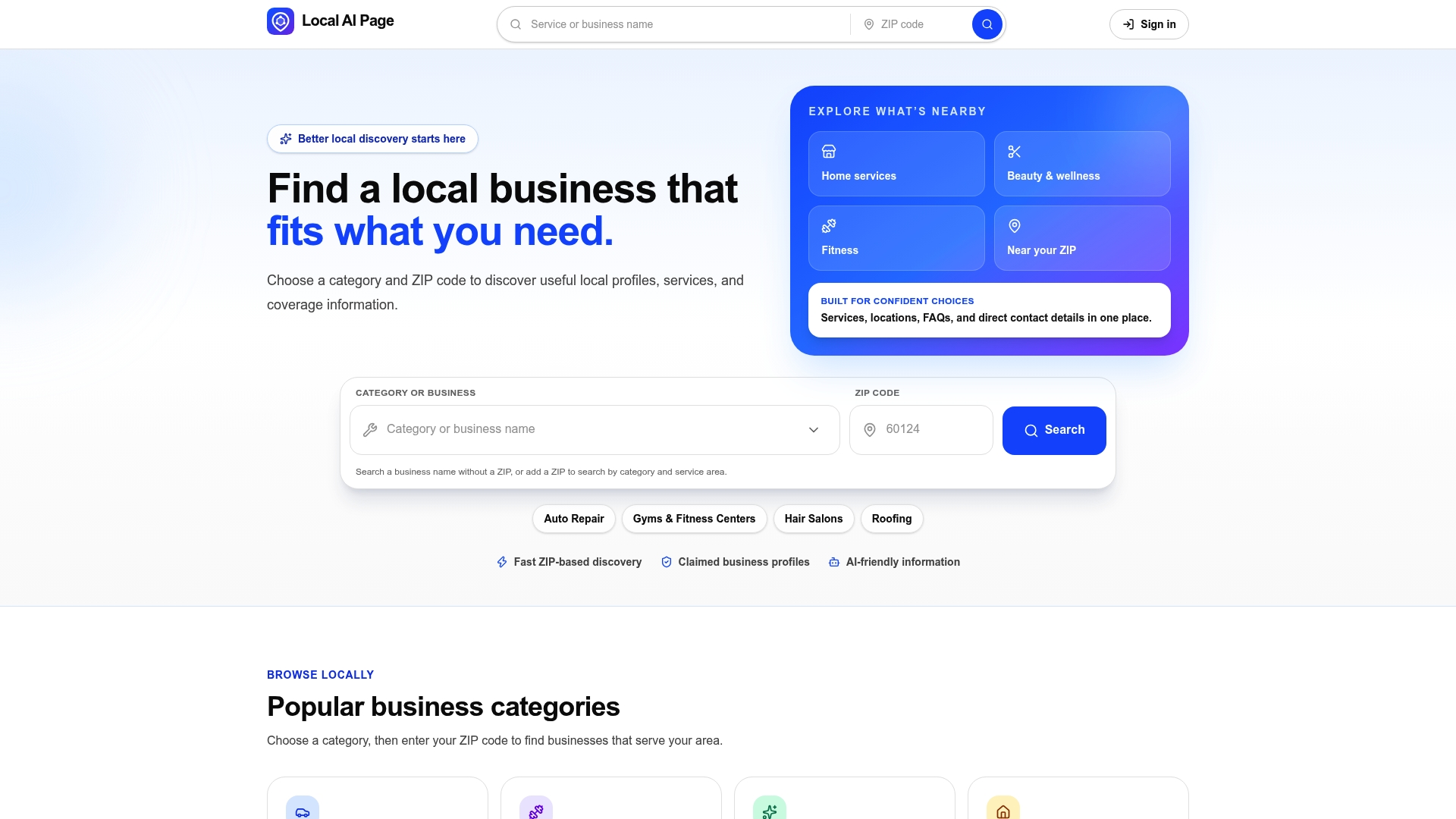
Localaipage centralizes your business profile, contact details, service area, and customer-facing FAQs in one verified listing, so the information you reference in every review reply stays consistent and current. Local service businesses, from landscaping crews to HVAC contractors, use Localaipage profiles to make sure prospective customers who read a review reply can reach them immediately, without hunting through outdated directories.
Claim or update your Localaipage listing today. It takes minutes, and it means every review reply you write points customers to accurate, verified contact information.
Sources
Short list of authoritative resources to validate and expand what’s covered in this guide:
-
How to respond to negative reviews: the L.A.S.T. framework + 7 real examples · Reviewz
-
How to Handle a Bad Business Review | CO- by US Chamber of Commerce
-
How to Respond to Google Reviews: A Step-by-Step | Web Tonic™