
Roof Replacement Cost: What to Budget in 2026
Roof Replacement Cost: What to Budget in 2026
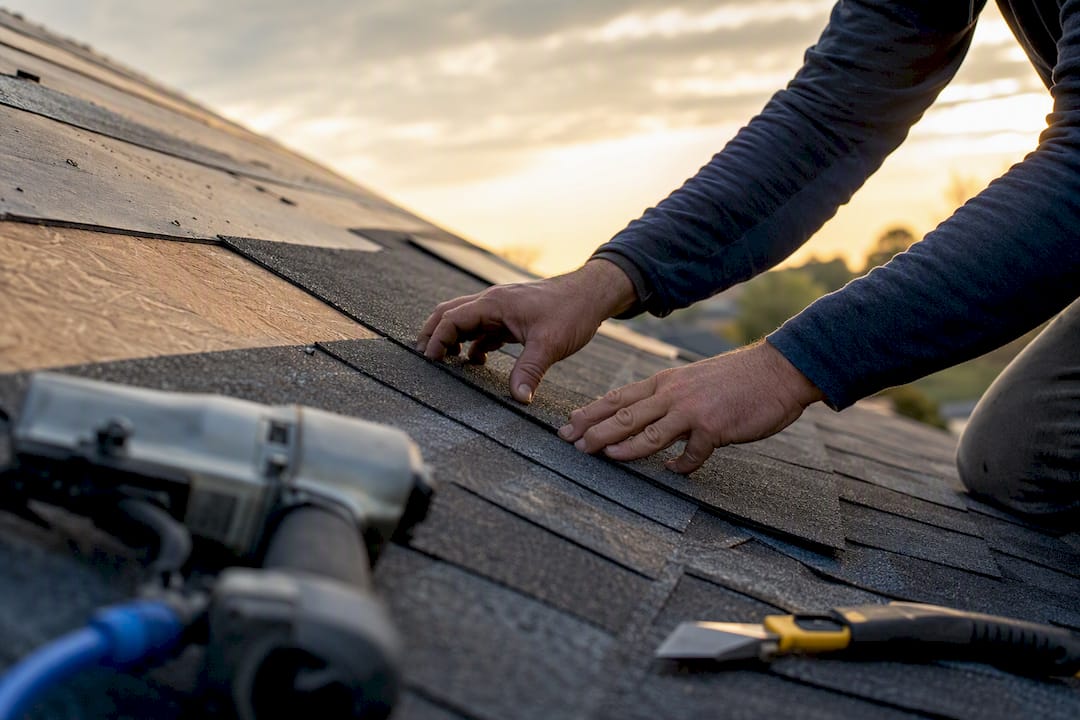
Most homeowners will spend between $9,000 and $30,000 on a full roof replacement in 2026, with asphalt shingle jobs landing closer to $9,000 to $18,000 and premium materials like tile or slate pushing well past $30,000. The single biggest driver of cost within that range is roof size combined with material choice, rather than labor or location, although those factors also contribute. Two numbers anchor this: the national average replacement cost sits at $17,631, and mid-range architectural asphalt shingles typically run $5 to $8 per square foot installed.
Before you call a single contractor, do three things:
- Measure your roof in “squares” (100 sq ft units) so every quote you get uses the same units.
- Pick a material class you’re targeting, since that decision alone can swing your total by $20,000 or more.
- Get three local quotes with itemized scope, not just a bottom-line number, so you can compare apples to apples.
Key Takeaways
Roof replacement cost in 2026 depends primarily on roof size and material choice, with the national average sitting at $17,631 for a standard installation.
| Point | Details |
|---|---|
| National benchmark | The 2025/2026 national average replacement cost is $17,631, useful as a quick sanity check against local quotes. |
| Material moves the number most | Asphalt runs $8,500 to $17,600 for a typical home; metal, tile, and slate can run two to five times higher. |
| Complexity adds real percentages | Steep pitch, multiple stories, and valleys can add 10% to 40% on top of base per-square pricing. |
| Full tear-off costs more but reveals problems | Skipping tear-off saves money short-term but hides deck damage that shortens your new roof’s lifespan. |
| Compare local contractors before committing | Local AI Page lets homeowners search verified roofing profiles by ZIP code to gather itemized, apples-to-apples quotes. |
Table of Contents
- Average Roof Replacement Cost and Per-Square-Foot Ranges in 2026
- How Roof Replacement Cost Varies by Material
- How Size, Pitch, and Roof Complexity Change Your Price
- What’s Actually on Your Roofing Bid (and What Gets Left Off)
- Labor Costs and Regional Price Differences
- How to Estimate Your Own Roof Replacement Cost
- Ways to Lower Your Roof Replacement Cost
- How Long a Roof Replacement Takes
- Partial Tear-Off vs. Full Tear-Off: Which Costs More?
- Warranty Types and What They Add to Your Cost
- What Disposal and Cleanup Add to Your Total
- Frequently Asked Questions
- Sources
Average Roof Replacement Cost and Per-Square-Foot Ranges in 2026
That $17,631 national average isn’t arbitrary. Verisk’s 2025 residential claims data puts total U.S. replacement value at $23 billion for the year, and the figure has climbed from 2021 to 2024 baselines mainly because labor costs rose, material prices haven’t softened, and the average job now includes more scope, think code-required upgrades and better underlayment, than it did five years ago.
Per-square-foot pricing gives you a faster gut check than a lump-sum average, because it scales with your actual house. Entry-level 3-tab asphalt runs $4 to $6 per square foot installed, while architectural (dimensional) asphalt, the shingle most homeowners actually choose, runs $5 to $8 per square foot. On a typical 1,700 to 2,200 sq ft home, that translates to a job cost somewhere between $9,000 and $18,000 for asphalt alone, which lines up closely with the $9,000 to $18,000 range reported for standard single-family homes.
Unusually low bids often skip required components like ice-and-water shield or proper nailing patterns to hit a lower number, and it’ll cost you more later in leaks or insurance claim denials.*
How Roof Replacement Cost Varies by Material
Material choice moves your total more than almost any other single decision, and the gap between the cheapest and priciest option on a standard 2,000 sq ft home can exceed $50,000.
Architectural asphalt shingles dominate residential roofs](https://theroofingbrief.com/how-much-does-a-new-roof-cost/), largely because they’re the cheapest to install and easiest for crews to source and work with. Architectural asphalt runs moderate per square installed pricing, meaning a 2,000 sq ft roof (20 squares) falls within a typical mid-range cost. Lifespan tops out around 20 to 30 years depending on climate and shingle grade. They’re the right call if you’re budget conscious or plan to sell within a decade.
Metal roofing, usually standing-seam steel or aluminum, costs $10 to $18 per square foot, or $950 to $1,650 per square, putting a 2,000 sq ft installation between $19,000 and $33,000. That’s two to three times the asphalt price, but metal can last 40 to 70 years and increasingly earns insurance discounts in hail and wildfire zones because it holds up better against impact and fire than shingles. If you live somewhere that gets hammered by hailstorms or wildfire risk, the lifecycle math often favors metal even with the higher sticker price.
Clay and concrete tile run $11 to $25 per square foot, translating to $1,200 to $2,400 per square and a 2,000 sq ft total of $24,000 to $48,000. Tile handles heat and UV exposure exceptionally well, which is why it dominates rooflines across the Southwest and parts of the Southeast, but it’s heavy. Many homes need structural reinforcement before installation, and that’s a cost most homeowners don’t budget for until a contractor flags it during inspection.
Wood shakes and shingles sit in a similar upper-mid range, though pricing varies more by region and wood species (cedar being the common choice). They deliver a distinctive look that suits craftsman and cottage-style homes, but they demand more maintenance than any other material on this list, periodic treatment against rot and moss, and they’re restricted or banned outright in high-wildfire-risk jurisdictions.
Natural slate tops the cost chart at $15 to $30 per square foot, or $1,800 to $4,000 per square, pushing a 2,000 sq ft job to $36,000 to $80,000. Slate can last well over a century with minimal maintenance, which is why it shows up on historic homes and high-end new construction where the owner is thinking in decades, not years. It also requires specialized installers and a structural frame built to handle the weight, so it’s rarely a retrofit decision.
How Size, Pitch, and Roof Complexity Change Your Price
Contractors price roofing in “squares,” and GAF’s homeowner guidance breaks the math down simply: take your roof’s total surface area in square feet and divide by 100. A 2,000 sq ft single-story ranch with a simple gable roof might have a roof surface area close to 2,200 sq ft after accounting for slope, giving you 22 squares. A two-story home with the same footprint often has a more complex roofline, dormers, multiple ridgelines, valleys, which can push the actual surface area to 2,600 or 2,800 sq ft, or 26 to 28 squares, even though the house footprint hasn’t changed.
Complexity adds cost beyond the raw square count, and it does it in fairly predictable bands:
- Steep pitch (above 6:12) adds 10% to 20% to labor costs, since crews work slower and need additional safety equipment.
- Multiple valleys or dormers add 5% to 15%, driven by extra flashing, cutting, and waste.
- Multi-story homes add 10% to 25% for the added time and equipment (lifts, extended ladders, staging) needed to work safely at height.
- Steep pitch combined with high complexity can stack these premiums, occasionally pushing a job 30% to 40% above the base per-square rate.
A quick example: a 24-square architectural asphalt job at $500 per square starts at $12,000.
Pro Tip: *Ask your contractor for a decking allowance up front, not after they’ve torn off the old roof.
What’s Actually on Your Roofing Bid (and What Gets Left Off)
A detailed bid should separate out several line items, and each one is a place where scope, or corner-cutting, hides.
- Tear-off and disposal: typically bundled but should be itemized separately since it varies by number of existing layers.
- Permits: usually $100 to $500 depending on your municipality, and a bid that doesn’t mention permits at all is a red flag.
- Underlayment and ice-and-water shield: a few hundred to over a thousand dollars depending on roof size and local code requirements in freeze-prone climates.
- Flashing (chimneys, skylights, pipe boots): often $200 to $600 in materials and labor per penetration point.
- Ventilation upgrades: ridge vents or additional intake vents can add $300 to $1,000 but pay for themselves through better attic performance and shingle life.
- Decking repair: priced per sheet of plywood or OSB replaced, usually $75 to $150 per sheet installed once damage is found.
Contractors typically discover deck damage once the old roofing material comes off, which is why a firm, all-in quote with no allowance for decking is worth questioning. Watch for vague line items like “miscellaneous materials,” a labor line that seems too thin relative to the material cost, or any bid missing a permit line entirely. As one industry cost report puts it, quotes that land far below the published regional range usually mean something required got left out, while quotes far above it usually mean extra scope you should ask about directly.
Pro Tip: Request a line-item breakdown in writing before signing anything, even from a contractor you trust. It protects you if a supplemental cost comes up mid-project and gives you a paper trail for insurance or resale purposes.
Labor Costs and Regional Price Differences
Labor is where roofing costs diverge most sharply from one ZIP code to the next. Contractor surveys show roofing labor rates ranging from about $45 an hour in lower-cost rural markets to $95 an hour in expensive metros, and that gap alone can shift an identical job by several thousand dollars.
Location adds cost in other ways too. Florida’s High-Velocity Hurricane Zone (HVHZ) counties, mainly Miami-Dade and Broward, add a 10% to 25% premium over non-HVHZ Florida pricing because of enhanced wind-resistance requirements. Markets recovering from recent hurricanes or wildfires often see temporary price spikes too, driven by contractor backlogs and material shortages rather than any change in your actual roof.
Before you get quotes, ask contractors:
- Is this bid based on current local permit fees, or an estimate?
- Does your crew carry the certifications required for my county’s wind or energy code?
- Are you scheduling around a seasonal backlog, and does that affect price or timeline?
How to Estimate Your Own Roof Replacement Cost
You don’t need a contractor on-site to get a reasonable ballpark. Follow this sequence:
- Measure or pull your roof’s square footage from an appraisal, blueprint, or a satellite measurement tool, then divide by 100 to get your squares.
- Apply a slope factor if your roof is steep; a 6:12 pitch or steeper adds roughly 10% to 20% to your flat square-footage number before you calculate squares.
- Multiply squares by your target material’s per-square price (from the ranges above) to get a base installed estimate.
- Add a contingency of 10% to 20% for decking repair, permits, and disposal.
Once you have a working number, use it to sanity-check bids, not replace them. When contractors quote you, ask for identical scope on each: same material grade, same warranty length, same disposal method, and a stated decking allowance, so you’re comparing real numbers instead of three different projects. A refinance or home-improvement calculator can help you figure out financing capacity before you commit to a material tier that stretches your budget too thin.
Ways to Lower Your Roof Replacement Cost
Timing is one of the easiest levers homeowners overlook. Roofers often price late fall and winter jobs more competitively than peak spring and summer demand, when crews are booked out weeks in advance.
On financing, homeowners with limited income facing an essential repair should check USDA Single-Family Housing repair loans and grants, which cover roofing among other critical home repairs for qualifying rural households. Many lenders also offer home-improvement loans specifically structured around roofing projects.
- Do negotiate on timing and material upgrades bundled together, contractors have more flexibility on price when you’re not asking for a rush job.
- Do prioritize warranty coverage and proper attic ventilation over shaving a few hundred dollars off the base bid.
- Don’t accept a verbal-only quote or skip the written scope of work.
- Don’t choose the cheapest bid without confirming it includes the same underlayment and flashing work as your other quotes.
That’s a better return than almost any other line-item negotiation.*
How Long a Roof Replacement Takes
A standard asphalt shingle replacement on an average single-family home typically takes a few days. Premium systems like tile, slate, or standing-seam metal often stretch to a full week or more because of specialized installation techniques and longer material lead times.
Before the crew arrives, homeowners should:
- Move vehicles away from the driveway and clear the perimeter of the house.
- Cover or move sensitive landscaping near the roofline, falling debris is unavoidable.
- Plan for a noisy household for the duration, especially if anyone works from home.
- Expect a magnetic sweep for nails afterward, and walk the property yourself too.
At the final walkthrough, collect your written warranty documents (both manufacturer and workmanship), verify all debris and dumpster removal is complete, and confirm any permit closeout paperwork has been filed with your municipality.
Partial Tear-Off vs. Full Tear-Off: Which Costs More?
A full tear-off, stripping every existing layer down to the decking, costs more upfront than a partial tear-off or overlay, typically adding $1 to $3 per square foot in labor and disposal. But it’s the only option that lets a contractor actually inspect and repair your decking, which is where the real risk of a bad roof hides.
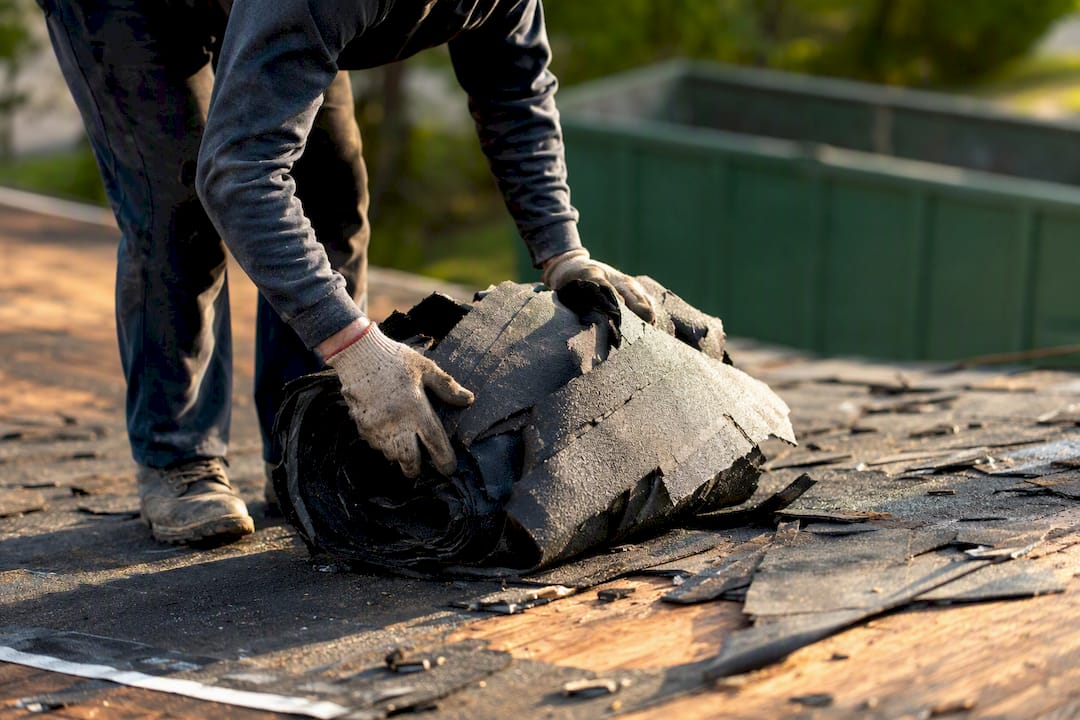
Partial tear-offs or overlays only work when your existing roof has a single layer, no sagging, and no signs of moisture damage underneath. Most local codes cap roofs at two layers of asphalt shingles maximum, so if you’ve already got one overlay in place, your next replacement has to be a full tear-off by law in most jurisdictions.
The cost logic runs the other direction from what many homeowners assume: skipping the tear-off saves money today but hides problems (rotted decking, trapped moisture, failed flashing) that show up later as leaks, mold, or a shortened lifespan on the new shingles. A full tear-off costs more now specifically because it eliminates that uncertainty; you’re paying to know what’s underneath rather than betting that nothing’s wrong. For a roof with any leak history, insurance claim, or age past 20 years, a full tear-off is the more defensible choice even at the higher price point.
Warranty Types and What They Add to Your Cost
Roofing warranties come in three layers, and each one changes your total price differently. Manufacturer material warranties (typically 20 to 50 years depending on shingle grade) come standard with most products and add little to no cost. Workmanship warranties from the installer, covering labor errors like improper flashing or fastening, typically run 2 to 10 years and are sometimes included free, sometimes priced as an add-on worth a few hundred dollars.
Extended or “system” warranties, where a manufacturer certifies the installer and backs the full roofing system (materials plus labor) for 25 to 50 years, cost more upfront, often $500 to $1,500 additional, but transfer real risk away from the homeowner. These require the installer to be manufacturer-certified, which is worth confirming since not every roofer qualifies to offer them.
The cost tradeoff is straightforward: a longer, stronger warranty raises your bid slightly but reduces the financial exposure if something fails in year 8 instead of year 25. For a roof you plan to keep for decades, the extended system warranty is usually worth the added cost. For a home you might sell in five years, a standard manufacturer warranty plus a solid workmanship guarantee is often sufficient, and keeps your upfront number lower.
What Disposal and Cleanup Add to Your Total
Tear-off debris has to go somewhere, and that cost is baked into most bids as a line item worth understanding on its own. A standard dumpster rental for a roofing job runs $300 to $600 depending on your market and roof size, and larger or multi-layer tear-offs may require a second dumpster, adding another few hundred dollars.
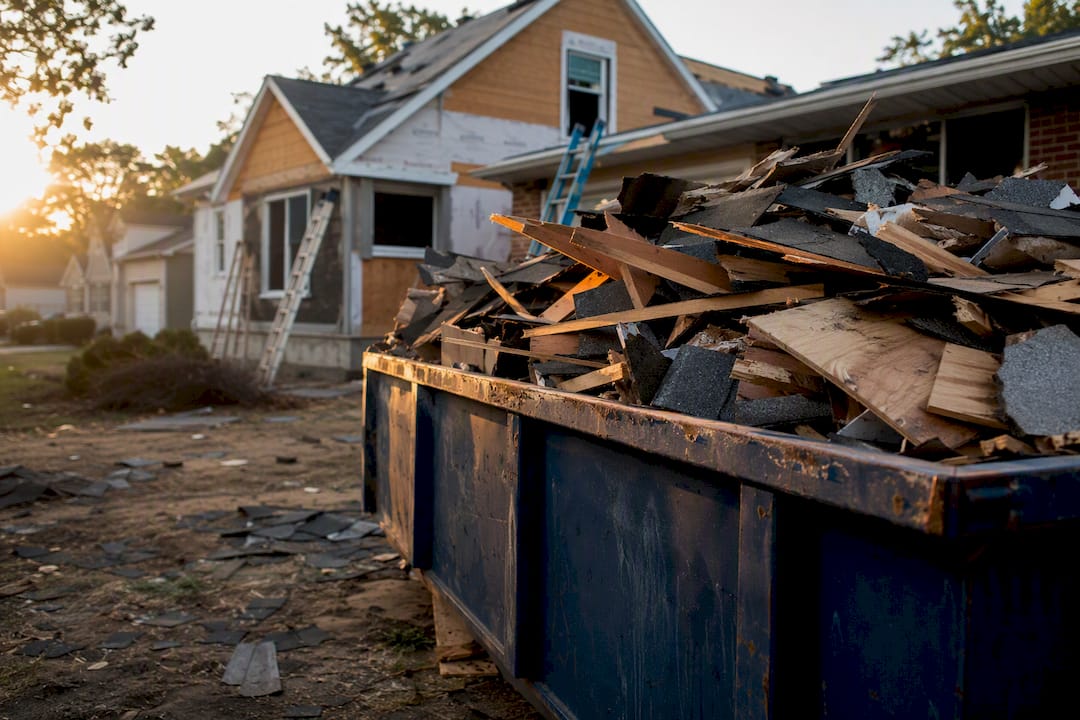
Disposal costs scale with the number of layers removed and the material type; heavier materials like tile or slate cost more to haul and dispose of than asphalt shingles, and some municipalities charge higher landfill tipping fees for construction debris than others. Magnetic nail sweeps, cleanup of landscaping, and gutter clearing are typically included in a reputable contractor’s base price, but it’s worth confirming in writing rather than assuming.
If your contractor’s bid doesn’t mention dumpster size, disposal method, or a cleanup guarantee, ask directly. A bid that’s suspiciously low relative to others sometimes cuts corners here first, leaving nails in your yard or debris in flower beds that becomes your problem to clean up after the crew leaves.
A Practical Note on Balancing Cost and Value
Getting this right isn’t about chasing the lowest number, it’s about knowing what you’re actually paying for at each price point. The homeowners who end up happiest are the ones who got three itemized bids, asked pointed questions about decking allowances and warranty terms, and picked the option that matched how long they actually plan to stay in the house.
Find and Compare Local Roofing Contractors by ZIP Code
Once you know your target budget and material class, the next challenge is finding contractors worth calling, and that’s exactly what Local AI Page was built to solve.

Search by ZIP code and you’ll see verified business profiles for roofing contractors in your service area, complete with contact details, service area maps, and answers to common questions upfront, so you’re not starting every call from scratch. Instead of hunting through scattered reviews and cold-calling names off a search results page, you can compare multiple local roofers side by side in one place and reach out directly to the ones that fit your project and budget. Homeowners in the Chicago suburbs, for instance, can browse verified providers by ZIP code or look at examples like contractor profiles in the Lombard, IL area to see exactly what information gets listed before you ever pick up the phone.
Search “roofing” plus your ZIP code on Local AI Page and start comparing verified local options today.
Frequently Asked Questions
What is the average cost to replace a roof in 2026? The national average sits at $17,631, though most asphalt shingle jobs on a typical home fall between $9,000 and $18,000, with premium materials running considerably higher.
How much does a new roof cost per square foot? Architectural asphalt runs $5 to $8 per square foot installed, while metal, tile, and slate range from $10 to $30 per square foot depending on material and complexity.
Does roof pitch affect the price? Yes.
Is it cheaper to overlay a roof instead of doing a full tear-off?
How long does a roof replacement take? A standard asphalt job typically takes one to three days; premium materials like tile, slate, or metal can take a week or more.
Can I finance a roof replacement? Yes. Options include home-improvement loans, contractor financing, and for qualifying rural households, USDA repair loans and grants for essential repairs.
Sources
Cost figures throughout this guide draw on industry benchmark reports, regional contractor pricing surveys, and manufacturer measurement guidance. Sample calculations assume a 2,000 sq ft home (roughly 20 to 24 squares), single-layer tear-off, and standard synthetic underlayment unless otherwise noted.
- 2026 Roofing Cost Report: National + Regional Data | TRB
- Roof Replacement Costs: Cost of a New Roof | GAF Roofing
- How Much Does a New Roof Cost in 2026? US Pricing Guide
- Roof Replacement Cost (2026 Prices) | What Does a Roof Cost?