
Water Heater Replacement Cost: What to Expect in 2026
Water Heater Replacement Cost: What to Expect in 2026
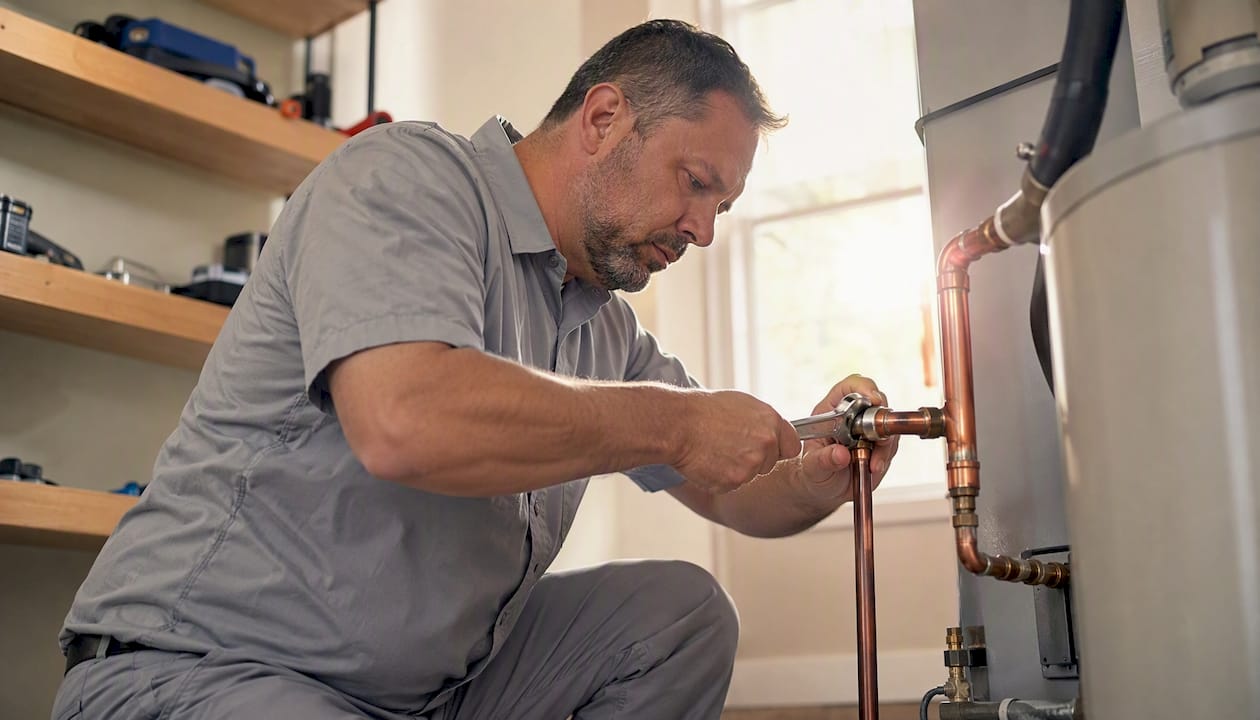
A standard tank water heater runs $800 to $2,800 installed, a tankless unit costs $1,500 to $5,500, and a heat pump water heater lands between $2,500 and $6,500 depending on fuel type and how much electrical or venting work the job needs, according to R.J. Groner’s 2026 cost guide. Labor typically eats 30% to 50% of that total for a straightforward tank swap, and climbs to 50% or 60% when a contractor has to run new electrical circuits or venting for a tankless or heat pump conversion. Permits and code-required extras like expansion tanks or drip pans add a notable additional cost on top, per PermitDeck’s breakdown.
Your next move, before you spend a dollar, is simple: get a written, line-itemed quote from at least two or three licensed plumbers, not a verbal ballpark. Here’s what to keep in front of you while you shop:
- Basic tank, like-for-like swap: $800 to $2,800 installed, most jobs done same-day.
- Tankless upgrade: $1,500 to $5,500, often more if venting or gas-line changes are needed.
- Heat pump conversion: $2,500 to $6,500, with real energy savings but stricter site requirements.
- Always ask: is this quote itemized, and does it include permits, disposal, and code upgrades?
Key Takeaways
A like-for-like tank replacement typically costs $800 to $2,800 installed, while upgrading to tankless or heat pump technology can push the total to $6,500 depending on site conditions and fuel-switching requirements.
| Point | Details |
|---|---|
| Know your baseline range | Standard tanks run $800–$2,800 installed; tankless and heat pump units run higher based on site work. |
| Labor drives the spread | Labor is 30%–50% of a tank job and 50%–60% or more for tankless/heat pump conversions. |
| Code items add up fast | Expansion tanks, drip pans, and seismic straps commonly add $100–$1,500 to a job. |
| Always get itemized quotes | Insist on line items for unit, labor, permits, disposal, and code upgrades before signing anything. |
| Check rebates before budgeting | Utility and state rebate programs vary by ZIP code and now matter more since the federal 25C credit ended for 2026 installs. |
| Use Local AI Page to compare installers | Search by ZIP code to find and contact local, vetted plumbing providers before requesting quotes. |
Table of Contents
- Water Heater Replacement Cost: What’s Actually in the Quote
- Comparing Costs by Water Heater Type
- Why Two Contractors Can Quote Wildly Different Prices
- How Long a Water Heater Replacement Actually Takes
- How to Get Quotes You Can Actually Trust
- Legitimate Ways to Cut the Cost Without Cutting Corners
- Should You Upgrade to Tankless or Heat Pump, or Just Replace What You Have?
- The Bottom Line on Getting This Right
- What We’ve Learned Reviewing Water Heater Quotes
- Find a Local, Vetted Installer Without the Guesswork
- Where to Verify These Numbers Yourself
- Frequently Asked Questions
- Sources
Water Heater Replacement Cost: What’s Actually in the Quote
A contractor’s number isn’t just “the water heater.” It’s a stack of line items, and knowing what belongs on that stack is how you catch a padded bid or a lowball that’s missing something critical.
The unit itself is usually the smallest surprise. A basic 40 to 50 gallon electric tank typically costs less retail than comparable gas units, with tankless units being considerably more expensive before labor… Labor is where the real variation lives. A same-day tank swap with no complications might take a plumber two to three hours, but a tankless conversion that requires new venting or a larger gas line can eat a full day or two, which is why labor commonly represents half or more of a tankless job’s total cost.
Permits are non-negotiable in most jurisdictions and typically cost $50 to $250, though some cities charge more for combined plumbing and electrical permits. Disposal of the old unit adds $25 to $75 in most markets. Then there are the code items that inspectors will flag if they’re missing: expansion tanks (roughly $50 to $150), drip pans ($20 to $50), and in earthquake-prone regions, seismic straps that meet standards outlined by the Earthquake Engineering Research Institute. Together, these code-required additions commonly add $100 to $1,500 to a job that looked simple on paper.
Before you sign anything, confirm your quote separates out these items:
- Unit brand, model, and capacity
- Labor hours and hourly or flat rate
- Permit fee and who pulls it
- Disposal fee for the old unit
- Any code-required safety hardware
- Warranty terms in writing, not just verbal assurance
Comparing Costs by Water Heater Type
Not every water heater replacement is the same job wearing a different label. A gas tank swapped for another gas tank is a different animal, financially and logistically, than switching to tankless or heat pump technology, and the comparison below should frame how you weigh sticker price against long-term ownership cost.
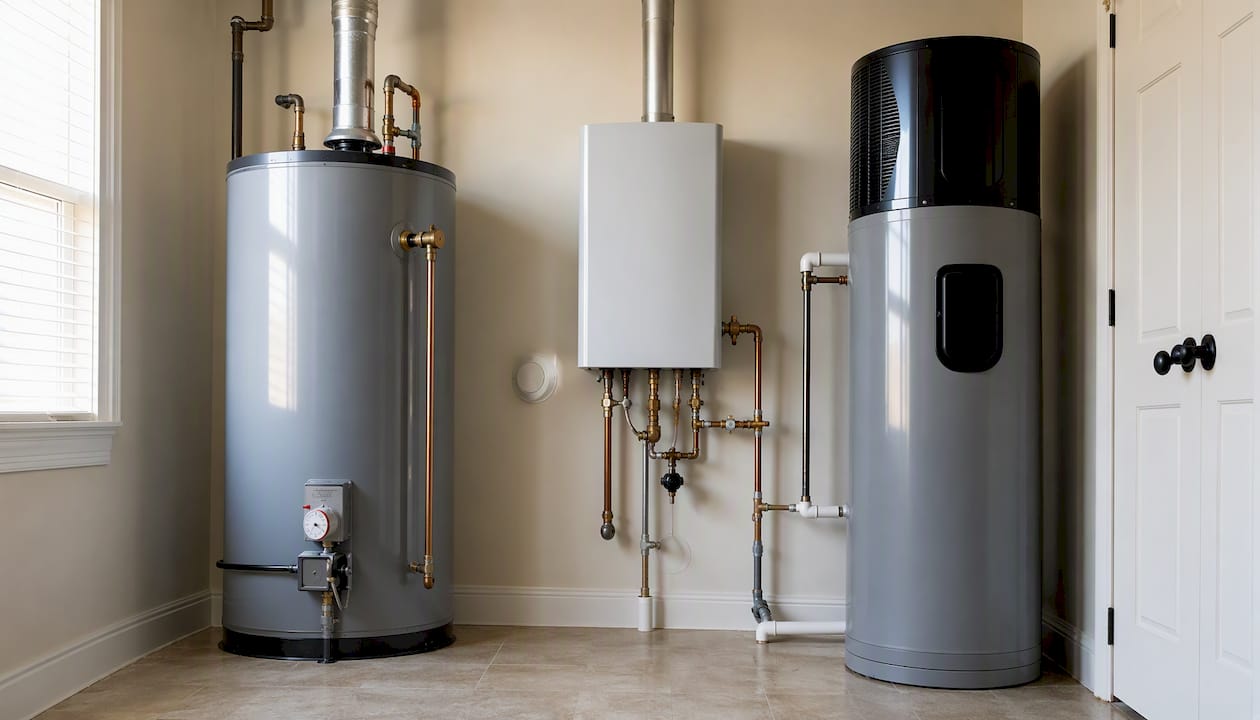
Standard tank. This is the workhorse option and the cheapest to install when you’re replacing like-for-like. The tradeoff is a shorter lifespan and steady standby energy loss, since the tank keeps water hot around the clock whether you’re home or not.
Tankless. You get near-endless hot water and a unit that can last close to two decades, but the upfront cost is meaningfully higher, and if your home wasn’t plumbed for tankless, the venting and gas-line work can rival the cost of the unit itself. Sandison Plumbing’s tankless service page walks through why venting requirements vary so much between models.
Heat pump. These pull heat from surrounding air rather than generating it directly, and the Department of Energy notes that real-world savings depend heavily on correct installation and where the unit sits. A heat pump water heater crammed into a tight, cold closet won’t perform the way one installed in a garage with airflow will. Groner’s analysis](https://rjgroner.com/water-heater-replacement-cost-2026/).
Point-of-use. Small electric units installed under a sink or near a single fixture. Cheap and fast to install, but they solve a narrow problem, not whole-house hot water demand.
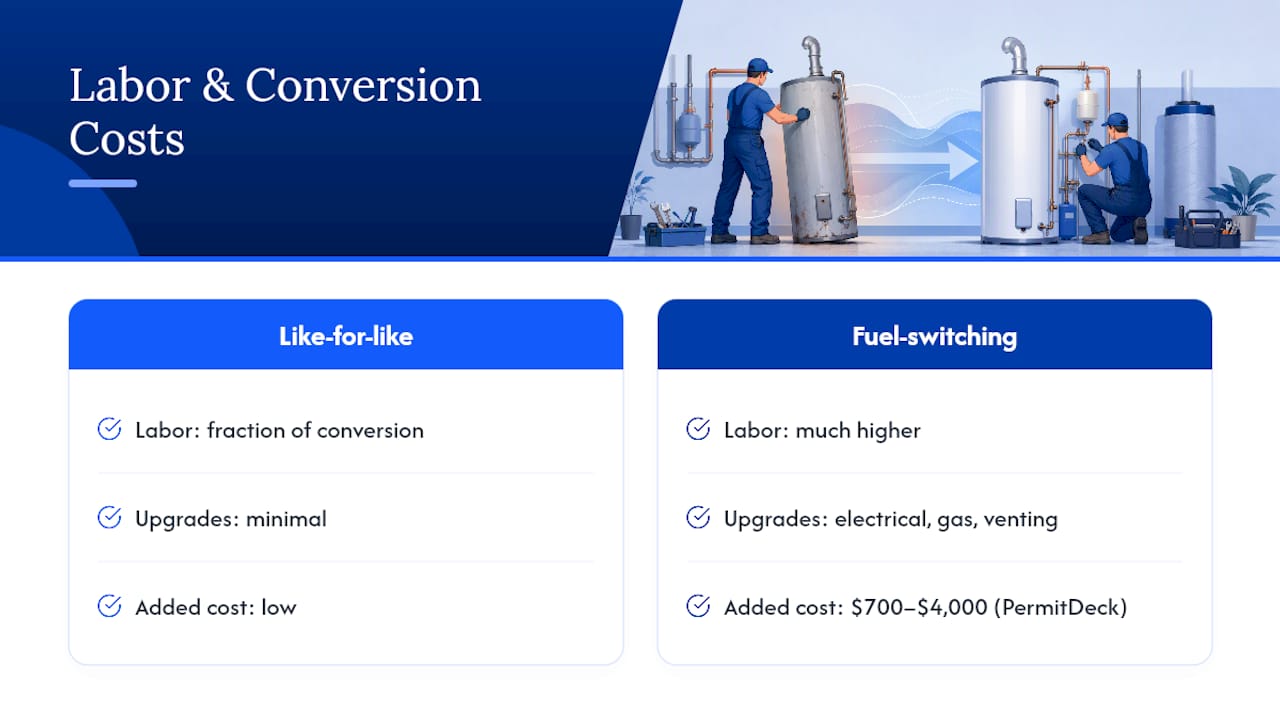
One more distinction matters more than most homeowners realize: a like-for-like replacement (gas tank to gas tank, same voltage electric to electric) is a fraction of the labor of a fuel-switching job. Converting from gas to electric, or from tank to tankless, frequently requires new electrical circuits or gas-line upsizing that can add $700 to $4,000 on its own, sometimes exceeding the price difference between the units themselves, per PermitDeck.
Why Two Contractors Can Quote Wildly Different Prices
Two plumbers can look at the exact same water heater and hand you numbers $1,000 apart, and it’s rarely because one of them is trying to rip you off. Site conditions drive a huge share of the spread, and understanding them helps you tell a justified higher bid from an inflated one.
Access is the first variable. A tank in an easy-to-reach garage takes a fraction of the labor of one wedged in a cramped attic or crawlspace, where a plumber might need extra hands or specialized equipment just to get the old unit out. Venting comes next: a tankless or high-efficiency unit often needs new venting or a condensate drain, and if your existing setup wasn’t built for it, that’s added pipe, added labor, and sometimes added permits.
Electrical and gas capacity matter too. If you’re moving to a heat pump water heater or an electric tankless unit, your panel may not have room for the new circuit, and a panel upgrade alone can run into the thousands. Gas line sizing works the same way: a tankless unit demands more BTU throughput than a standard tank, and if your existing line is undersized, upsizing it is real, billable work. On top of all that, regional labor rates swing prices by 20% to 35% in coastal, high-cost markets compared to the Midwest or South, largely because plumber wages themselves vary by metro area.
- Access and labor hours (garage vs. attic vs. crawlspace)
- Venting or condensate drain requirements for high-efficiency units
- Gas line diameter and whether it needs upsizing
- Electrical panel capacity for tankless or heat pump conversions
- Seismic strapping and other local code-required safety upgrades
- Existing permit history and whether prior work passed inspection
Pro Tip: Before you call for quotes, take photos of your current setup: the water heater from multiple angles, the electrical panel with the door open, the gas line connection, and the space around the unit. Text or email these to every contractor you’re getting bids from. It cuts down on guesswork and surprise change orders, and it lets a good contractor give you a far more accurate number over the phone or by email before ever stepping foot in your house.
How Long a Water Heater Replacement Actually Takes
A like-for-like tank swap is usually a same-day job, often wrapped up in two to four hours once the plumber arrives. Add complexity, and the clock stretches fast.
- Standard tank replacement: Two to four hours on-site for a straightforward swap with no code surprises.
- Tankless conversion: Four to eight hours, sometimes spread over two days if venting or gas-line work is extensive.
- Heat pump installation: Half a day to a full day, depending on clearance requirements and whether electrical work is needed.
- Permit and inspection window: Many jurisdictions require a scheduled inspection after installation, which can add several days to a few weeks depending on local permit office backlogs.
- Emergency replacement: Same-day or next-day service is common, but expect a premium of 25% to 50% over a scheduled job, since you’re paying for after-hours availability rather than planned labor.
The permit and inspection step is the part homeowners underestimate. Your water heater might be installed and working fine, but if your city requires a final inspection, you’re not technically done until that inspector signs off, and scheduling that visit can take anywhere from a few days to a few weeks depending on how busy your local permitting office is. If your current unit is still limping along, scheduling a non-emergency replacement ahead of a full failure is one of the simplest ways to avoid that after-hours premium entirely.
How to Get Quotes You Can Actually Trust
The single biggest lever you have over your final price isn’t finding the cheapest contractor. It’s forcing every contractor you talk to into the same itemized format, so you’re comparing real numbers instead of a mix of estimates, guesses, and sales pitches.
Send this template, or read it off in a phone call, to every contractor bidding your job:
- Unit brand, model, and gallon capacity you’re quoting.
- Labor cost, broken out separately from the unit price.
- Permit fee, and confirmation of who pulls the permit.
- Disposal fee for the old unit.
- Whether an expansion tank, drip pan, or seismic strap is included or extra.
- Total installed price, with tax, in writing.
- Warranty terms for both the unit and the labor.
Once you have quotes in hand, run each contractor through this checklist:
- Are they licensed and insured in your state or city? Ask for the license number and verify it if your state has a public lookup tool.
- Do they pull their own permits, or expect you to? A contractor who skips permits to save time is cutting a corner that can cost you at resale.
- Is the warranty in writing, and does it cover labor, not just the unit? Manufacturer warranties on the tank rarely cover the cost of removing and reinstalling it if something fails.
- Will they subcontract the job? Some companies sell the job then hand it to a subcontractor you never vetted.
- Can they show recent job photos or references? A contractor with nothing to show for past work is a red flag worth taking seriously.
Watch for these tactics, which experts consistently flag as signs you’re being oversold or undercut on quality:
- A quote with no line items, just one bundled total.
- Heavy pressure to sign today for a “special discount.”
- A price that seems far below every other bid with no explanation for the gap.
- Refusal to put the warranty terms in writing.
- Vague answers about who pulls the permit or whether one is needed at all.
Pro Tip: Ask directly whether a permit was pulled and inspected on their last three jobs, and ask to see the address or a photo of the completed work. Contractors who consistently skip permits are cutting a corner that becomes your problem if you ever sell the house, and industry guidance consistently points to itemized quotes and verified permits as the two biggest defenses against overpaying or getting shoddy work.
Legitimate Ways to Cut the Cost Without Cutting Corners
Saving money on a water heater replacement doesn’t have to mean gambling on safety or skipping code requirements. It means being strategic about timing, incentives, and scope.
Start with rebates. Utility companies and state energy offices frequently offer rebates for high-efficiency units, particularly heat pump water heaters, but eligibility and amounts vary widely by location, so check your specific zip code through a resource like ENERGY STAR’s rebate finder or your state energy authority, such as NYSERDA for New York residents. One important caveat: the federal 25C tax credit that previously helped offset the cost of high-efficiency water heaters no longer applies to equipment placed in service after the end of 2025, which means state and utility programs are now doing the heavy lifting on incentives.
Big-box retailers like home improvement chains often advertise flat installation pricing that looks appealing next to a custom quote from a local plumber. The convenience is real, and the pricing is often transparent upfront. The tradeoff is that big-box installs are frequently handled by third-party contractors the retailer subcontracts to, warranty claims can require navigating both the retailer and the installer, and any site complications you didn’t anticipate, like a gas line that needs upsizing, often get flagged as an add-on charge once the installer is already in your home. A local, licensed plumber may quote higher upfront but often owns the whole job, from the estimate to the warranty call, without a middleman.
- Ask for code-required upgrades to be itemized separately so you can see exactly what you’re paying for.
- If you’re already having other plumbing or electrical work done, ask about bundling to share labor costs.
- Scheduling a non-emergency replacement, rather than waiting for a failure, avoids emergency premiums entirely.
- Get bids from both a big-box installer and at least one independent local plumber to compare scope and price side by side.
Should You Upgrade to Tankless or Heat Pump, or Just Replace What You Have?
This is where the math gets personal, because the right answer depends less on the technology and more on your home, your energy costs, and how long you plan to stay put.
An upgrade tends to make financial sense when several factors line up at once: your local electricity or gas rates are high, you plan to own the home for a decade or more, meaningful rebates are available in your area, and you have the physical space a heat pump unit or tankless system requires. A heat pump water heater, for instance, needs clearance around it to pull in ambient air efficiently, which rules it out for some tight utility closets without modification.
Payback horizons vary a lot depending on your starting point. If you’re replacing a failed unit anyway, the incremental cost of upgrading to a heat pump water heater is smaller than installing one from scratch, since you’re already paying for labor and disposal either way. If your current electric rates are high and you qualify for a solid utility rebate, payback can land in the five to eight year range. Without rebates, or in a low electricity-cost region, payback can stretch well past a decade, which matters if you’re not planning to stay in the home that long.
- High local energy costs favor the switch to heat pump or tankless.
- A long ownership horizon (10+ years) improves the payback math.
- Available rebates can meaningfully shorten the time it takes to break even.
- Limited clearance space or a tight utility closet may rule out heat pump models.
- Confirm your specific rebate eligibility before you build a budget around assumed savings, since programs and amounts differ by state and utility.
The Bottom Line on Getting This Right
You don’t need to become a plumbing expert to avoid overpaying. You need three concrete actions, done in order, before you commit to any contractor.
- Inspect and photograph your current setup. Get shots of the water heater, the electrical panel, and the surrounding space, and note your current fuel type and tank size.
- Request at least three itemized, written quotes. Use the line-item template above and insist every bid breaks out unit, labor, permits, disposal, and code items separately.
- Verify permits and rebate eligibility before you budget. Confirm your contractor pulls permits and check your zip code against current utility or state rebate programs before assuming a number.
For most homeowners doing a straightforward, like-for-like 50-gallon swap, expect a total installed cost somewhere between $800 and $2,800, with the final number depending mostly on labor rates in your area and whether any code-required extras show up on the quote.
What We’ve Learned Reviewing Water Heater Quotes
The biggest misconception homeowners walk in with is that a wide price spread between quotes means someone is scamming them. Usually it means the two contractors are pricing two different jobs, even though they’re both technically “replacing a water heater.” One priced in the expansion tank and seismic strap your city requires; the other left it off and will hit you with a change order mid-install.
What gets underestimated constantly is how much a fuel switch or capacity upgrade changes the labor equation. Homeowners fixate on the unit price, gas tank versus electric versus tankless, when the bigger cost swing usually comes from whether your electrical panel or gas line needs work to support the new unit. A $2,000 tankless unit installed on an already-adequate gas line is a very different job from the same unit requiring a gas line upsize.
Our take: the itemized quote isn’t a formality, it’s the entire negotiation. A homeowner who insists on line items, checks for a permit history, and gets three comparable bids will almost always land a better outcome than one who just calls “the cheapest guy” or “the guy my neighbor used.” Trust the process more than any single number.
Find a Local, Vetted Installer Without the Guesswork
Once you know what a fair quote looks like, the next step is finding contractors worth calling in the first place. Local AI Page lets you search by ZIP code and pull up local plumbing and HVAC providers with service areas, contact details, and profiles built for quick comparison, so you’re not sorting through a stack of ads to find someone licensed and local.

Instead of cold-calling names off a search results page, you can compare multiple local providers side by side, see what areas they actually serve, and reach out directly once you’ve narrowed your list. If you’re ready to start gathering those itemized quotes we walked through above, search for local businesses by ZIP code and start comparing installers in your area today.
Where to Verify These Numbers Yourself
- Independent cost calculators, like the estimates aggregated at Current Cost, let you benchmark a contractor’s quote against regional installed-cost averages before you sign anything.
- ENERGY STAR’s rebate lookup tool lets you enter your ZIP code to see current heat pump water heater incentives available in your area.
- State energy authority pages, such as NYSERDA’s water heater guidance for New York residents, list state-specific rebate amounts and eligibility rules.
- BLS occupational wage data helps explain regional labor rate differences if you’re trying to understand why quotes in your area run higher or lower than national averages.
Frequently Asked Questions
What is a typical water heater replacement cost for a standard 50-gallon tank?
Most homeowners pay between $800 and $2,800 installed for a like-for-like replacement, with the final number depending on local labor rates and whether code upgrades like an expansion tank are required.
How much more does a tankless water heater installation cost compared to a tank?
Tankless installs typically run $1,500 to $5,500, higher than a standard tank mainly because of venting and gas-line work, which can add significant labor beyond the unit price itself.
Is it worth paying more for a heat pump water heater?
It depends on your energy costs, how long you plan to stay in the home, and available rebates. Heat pump units cost more upfront but can cut annual operating costs to under $100 compared to roughly $340 for a standard electric tank.
Why did my water heater installation cost estimate come in so much higher than my neighbor’s?
Site conditions like panel capacity, gas line size, venting requirements, and local labor rates vary house to house and region to region, which is why two seemingly similar jobs can price out very differently.
Are Home Depot or Lowe’s water heater installations cheaper than hiring a local plumber?
Big-box installation pricing can look competitive upfront, but the job is often subcontracted, and site complications discovered during install are frequently billed as add-ons. A local licensed plumber may quote higher but typically owns the full job and warranty directly.