
Window Replacement Cost in 2026: What Homeowners Should Budget
Window Replacement Cost in 2026: What Homeowners Should Budget
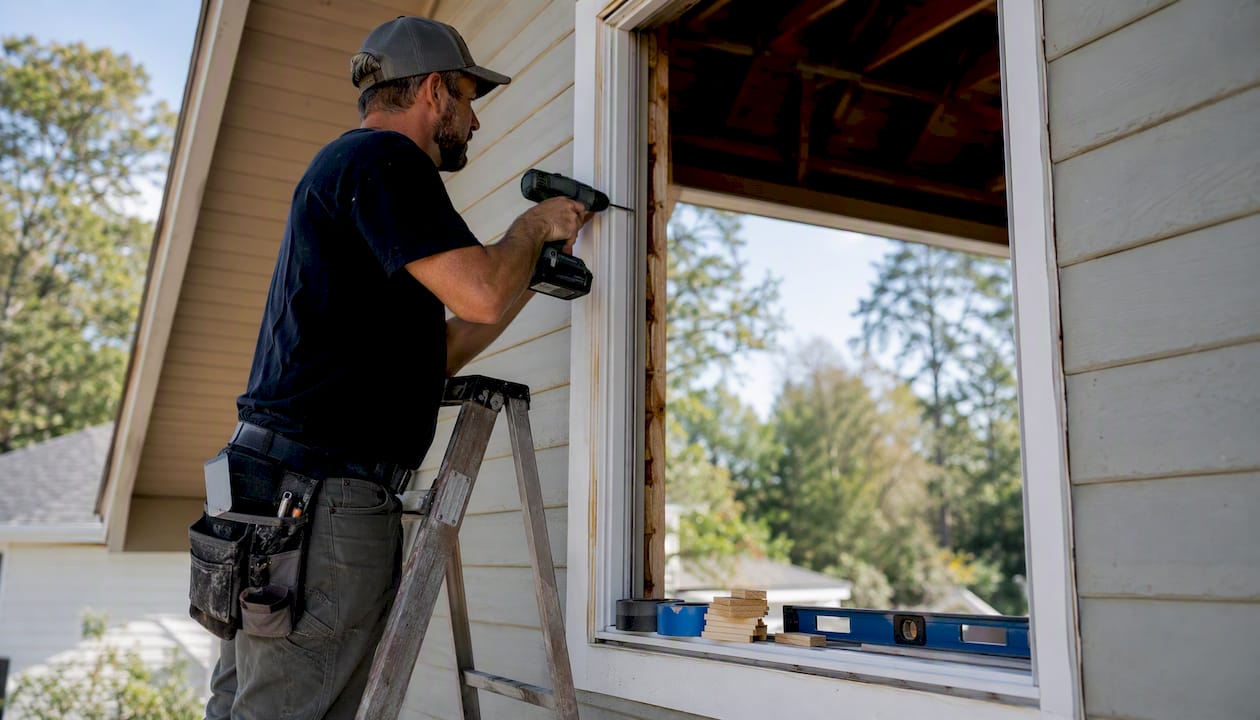
Most homeowners pay between $450 and $1,200 per window installed, with a national average near $750. A 10-window project typically runs $6,500–$18,650 depending on material, glass package, and installation type. Replace 20 windows and you’re looking at a substantial cost for a full-house scope, varying based on choices and location. NerdWallet’s compiled ranges put the outer bounds at $300–$2,500 per window, which reflects everything from a basic vinyl insert to a custom wood bay window with triple-pane glass. The spread is real, and it’s driven by choices you control.
Before you call a contractor, three things to do right now:
- Get at least three local quotes specifying the same install type, material, and glass package so you’re comparing the same scope.
- Confirm whether your project needs a retrofit (insert) or full-frame replacement — the cost difference can be $200–$500 per window.
- Check Energy on energy-efficient upgrades and search for federal or state rebates before you sign anything.
Key Takeaways
Window replacement costs $450–$1,200 per window installed nationally, with a typical 10-window project running $6,500–$18,650 depending on material, glass package, and installation type.
| Point | Details |
|---|---|
| Per-window installed range | Most homeowners pay $450–$1,200 per window; the national average sits near $750. |
| Whole-house project cost | A 10–15 window project typically runs $6,500–$18,650; 20 windows can reach $25,000+. |
| Top cost drivers | Frame material, glass package (Low-E/argon vs. triple-pane), and retrofit vs. full-frame install move price the most. |
| Labor share of total cost | Labor accounts for roughly 40%–50% of installed cost; regional wages can push totals 30%–50% higher in major metros. |
| Local AI Page | Search by ZIP code on Local AI Page to find and contact verified local installers and collect comparable quotes quickly. |
Table of Contents
- What does window replacement cost per window by style and material?
- How per-window prices add up across whole-house projects
- What actually changes your window replacement price
- Retrofit vs. full-frame: which installation type fits your project?
- Energy savings, ROI, and tax credits worth checking
- How to estimate your own window replacement cost step by step
- How to collect quotes that are actually comparable
- Practical ways to lower your project cost
- Finding local window installers is faster with Local AI Page
- Sources
What does window replacement cost per window by style and material?
The price you pay per window depends heavily on which style you’re replacing and what frame material you choose. Here’s how the numbers break down for typical installed costs.
By window style:
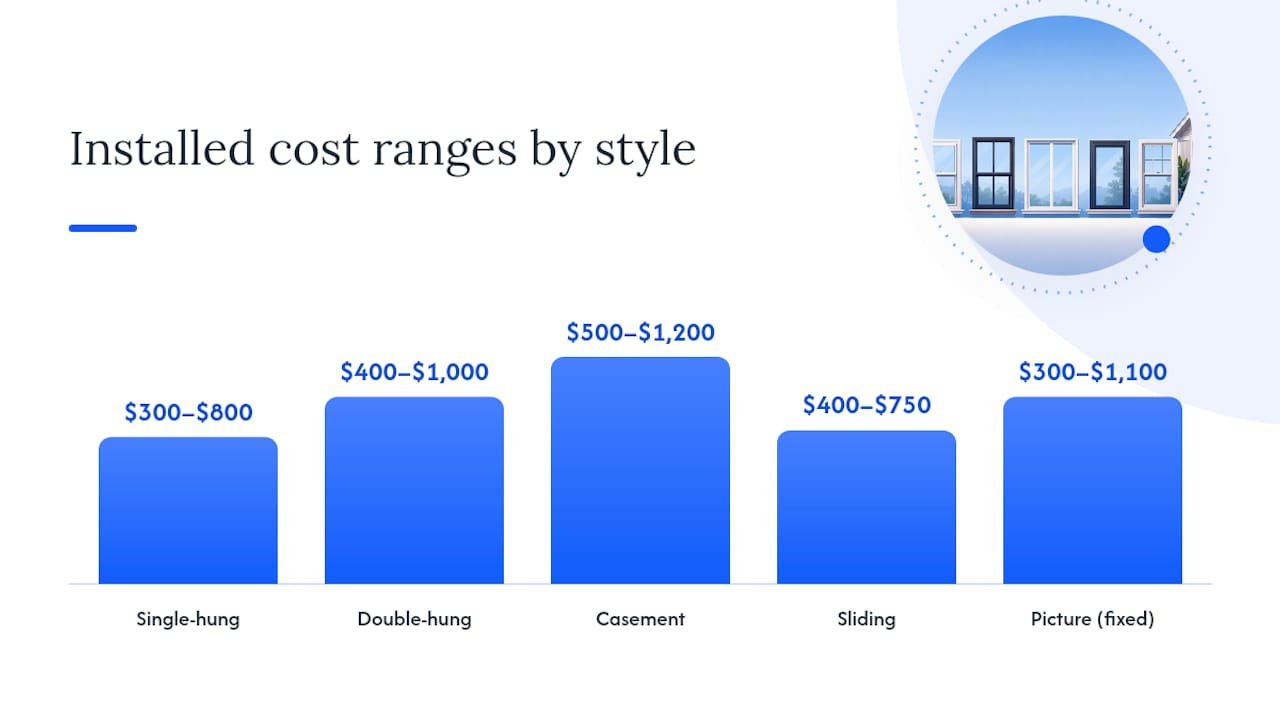
| Window Style | Installed Low | Installed High | What drives the high end |
|---|---|---|---|
| Single-hung | $300 | $800 | Oversized unit, custom color, upper-story access |
| Double-hung | $400 | $1,000 | Full-frame install, premium glass package |
| Casement | $500 | $1,200 | Wide span, multi-point lock hardware |
| Sliding | $400 | $750 | Wide opening, structural header work |
| Picture (fixed) | $300 | $1,100 | Large custom size, triple-pane glass |
| Bay or bow | $1,200 | $4,500 | Structural framing, roofline, interior finishing |
| Egress (basement) | $800 | $2,500 | Excavation, well installation, code compliance |
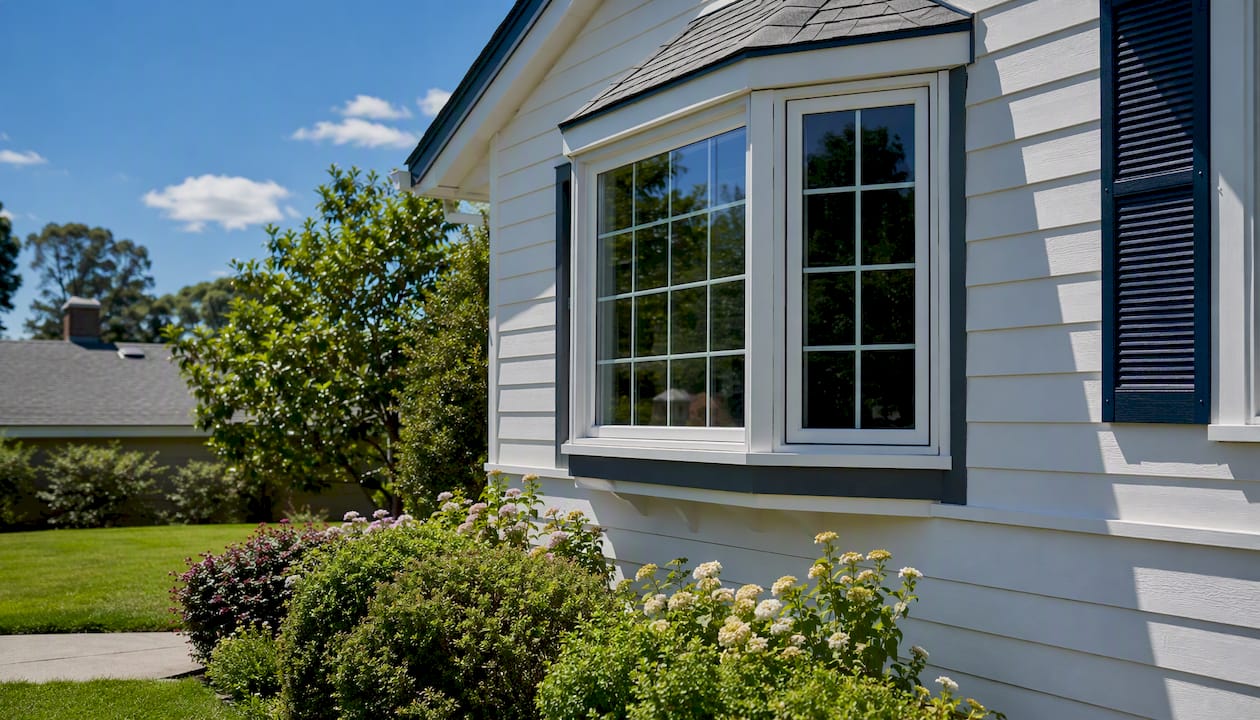
Bay and bow windows are in a different cost category entirely. They require structural framing, often a new roofline or seat, and significant interior finishing work. Budget them separately from your standard window count.
By frame material:
Vinyl is the value leader. Installed, vinyl windows typically run $300–$800 and require almost no maintenance. Wood frames cost $700–$1,200 installed and demand periodic painting or staining, but they’re the standard for historic homes and high-end renovations. Fiberglass and composite frames land at $800–$1,500 or more — they outperform vinyl on longevity and thermal performance, and they hold paint better than wood. Realtor confirms these bands and notes that fiberglass tends to carry the longest manufacturer warranties.
Pro Tip: If your opening is a standard size on the first floor with a sound frame, you’ll likely land at the lower end of any style’s range. Move to an upper story, add a custom color, or discover rot in the frame during removal, and you can add $200–$600 per window before the glass package is even discussed.
How per-window prices add up across whole-house projects
Here’s where homeowners often get surprised. The per-window average looks manageable until you multiply it across a full house.
Three project scenarios using the $450–$1,200 installed range:
-
5-window project (e.g., a condo or small addition): At the low end ($450 each), you’re at $2,250. At the national average of $750, that’s $3,750. At the high end ($1,200), you’re at $6,000. This scope rarely qualifies for bulk discounts.
-
10-window project (typical ranch or small two-story): Low end runs $4,500, average lands around $7,500, and a high-spec project hits $12,000. GetWindowCost’s 2026 data puts a 10–15 window project at $6,500–$18,650, which aligns with these ranges.
-
20-window project (larger two-story or whole-house replacement): Expect $9,000–$24,000 at the low-to-average range. Add specialty windows — one bay, one egress, a couple of oversized picture windows — and $30,000 is realistic for a premium scope.
Bulk pricing matters at scale. Most contractors discount per-window labor when they’re mobilizing for 10 or more units in a single visit. The savings don’t always show up as a line item; they show up in a lower total than the per-window math would suggest.
One more factor that skews totals: regional labor costs. BLS occupational wage data shows glazier and construction labor varies significantly across metros. The same window that costs $750 installed in a mid-sized Midwest city can run $950–$1,100 in a high cost-of-living metro like San Francisco or New York.
What actually changes your window replacement price
Most homeowners underestimate how many line items sit between the window unit price and the final invoice. Here’s the full checklist:
Items that typically add $50–$300 per window:
- Permit and inspection fees (required in most jurisdictions for full-frame work)
- Debris disposal and dump fees (old windows, packaging, trim scraps)
- Standard labor for a first-floor insert installation
- Basic trim repair and caulking
Items that can add $200–$1,000+ per window:
- Full-frame installation vs. retrofit insert (more on this below)
- Glass package upgrades: Low-E coatings and argon fill typically add roughly 30% to the glass cost; triple-pane adds substantially more
- Scaffolding or lift rental for upper-story or hard-to-access windows
- Custom frame colors or non-standard sizes
Items that can add thousands to a project total:
- Concealed rot or water damage discovered during removal (frame repair, sheathing replacement)
- Code-triggered egress upgrades when replacing basement windows
- Siding repair around full-frame replacements
- Lead-safe or asbestos-safe work protocols in pre-1978 homes
Red flags to ask contractors about before signing:
- Any evidence of soft wood, staining, or moisture around existing frames
- Whether your jurisdiction requires a permit for the planned scope
- Whether the home was built before 1978 (lead paint disclosure and safe-work protocols apply)
- Whether existing rough openings are square and plumb (out-of-square openings require shimming and can trigger full-frame work)
Pro Tip: Ask every contractor to walk you through the scope verbally before they quote. If they haven’t looked at the rough openings, they’re guessing on the labor. A contractor who inspects the frames in person before quoting is almost always more accurate than one who quotes from photos.
Retrofit vs. full-frame: which installation type fits your project?
These two approaches look similar from the outside but differ significantly in cost, timeline, and what they fix.
Retrofit (insert) installation replaces only the window sash and frame insert, leaving the existing exterior casing, interior trim, and rough framing in place. It’s faster, cheaper, and causes less disruption. A single retrofit window typically takes one to two hours per opening. The trade-off: if the existing frame has rot, air gaps, or is out of square, a retrofit won’t fix those problems. It just covers them.
Full-frame replacement removes everything down to the rough opening: the old frame, exterior casing, interior trim, and sometimes sections of siding. It’s the right call when:
- The existing frame shows rot or water damage
- The opening is out of square or undersized for code
- You’re changing the window size or style
- You’re replacing siding at the same time (the work overlaps efficiently)
Full-frame installations run $100–$500 more per window than a comparable retrofit, primarily because of the additional labor and the trim/siding repair work that follows. A single full-frame window takes three to five hours for an experienced crew.
For a 10-window project, the timeline difference is meaningful. A retrofit crew can typically complete 10 standard windows in one to two days. Full-frame work on the same count usually runs three to five days, and that’s before any rot remediation or siding repair.
Homewyse’s cost tables show that labor accounts for roughly 40%–50% of total installed cost. Full-frame work pushes that share higher because of the additional prep and finishing steps.
Energy savings, ROI, and tax credits worth checking
Replacing old, single-pane, or failing windows with energy-efficient units does reduce heating and cooling loss. The U.S. Department of Energy recommends evaluating both repair and replacement options and notes that energy-efficient windows can meaningfully cut energy loss through the building envelope.
The glass package you choose drives most of the efficiency gain. Low-E coatings with argon fill are the best general-purpose upgrade: they block radiant heat transfer in summer and reduce heat loss in winter without a dramatic cost premium. Triple-pane glass is worth the extra investment in cold climates (think Minnesota, Wisconsin, or the northern Rockies) where heating loads are high and noise reduction is a secondary benefit.
Energy-efficient replacement windows can reduce energy loss through windows by a significant margin. The U.S. Department of Energy notes that drafty, single-pane windows are among the highest sources of heat loss in older homes, and that upgrading to ENERGY STAR-certified units is one of the most cost-effective envelope improvements a homeowner can make.
ROI on window replacement is commonly cited in the 50%–85% range when factoring in energy savings and resale value contribution, per USA Today’s 2026 reporting. That’s not a guarantee — it depends on your climate, the condition of your existing windows, and the local real estate market. But windows that are visibly failing, drafty, or single-pane in a cold climate tend to pay back faster.
Check the IRS guidance and your state’s energy office for current eligibility. Many utilities also offer rebates for ENERGY STAR-certified replacements.
Pro Tip: Schedule your installation in late fall or winter. USA Today’s reporting confirms that off-season scheduling is one of the most reliable ways to reduce out-of-pocket costs.
How to estimate your own window replacement cost step by step
You don’t need a contractor to build a working budget. Here’s a repeatable process.
-
Measure and count. Write down the rough opening dimensions for each window and note the style (double-hung, casement, etc.). Flag any that are non-standard sizes or in hard-to-access locations.
-
Choose your install type. Inspect each frame for rot, soft spots, or visible gaps. If the frame is sound and the opening is square, plan for retrofit. If you find damage or you’re changing the window size, budget for full-frame.
-
Select frame material and glass package. Vinyl + Low-E/argon is the most common choice for budget-conscious projects. Fiberglass + Low-E/argon is the upgrade path for longevity. Triple-pane is worth adding if you’re in a cold climate or a noisy neighborhood.
-
Add per-window line items. Use the table below to build your per-window cost.
-
Add project-level line items and contingency. Permits, disposal, and a 10%–15% contingency for concealed damage.
Per-window cost components:
| Line Item | Typical Low | Typical High | Notes |
|---|---|---|---|
| Window unit (material) | $150 | $800 | Vinyl low, fiberglass/wood high |
| Labor (retrofit) | $150 | $300 | Per window, first floor |
| Labor (full-frame) | $300 | $600 | Includes trim repair |
| Glass upgrade (Low-E/argon) | $50 | $150 | Added to unit cost |
| Triple-pane upgrade | $100 | $300 | Cold climate; adds to unit cost |
| Disposal (per window) | $15 | $50 | Old window, packaging |
| Permit (amortized) | $20 | $80 | Varies by jurisdiction |
Homewyse’s calculator shows a national mid-range installed example of $632–$967 per window (May 2026 snapshot), which aligns with this table when you add a standard vinyl unit, retrofit labor, and a Low-E glass package.
Sample calculation: 10 double-hung vinyl windows, retrofit, Low-E/argon, first floor, Midwest metro.
- Unit cost: $250 × 10 = $2,500
- Labor (retrofit): $200 × 10 = $2,000
- Low-E/argon upgrade: $80 × 10 = $800
- Disposal: $25 × 10 = $250
- Permit: $300 (flat fee, amortized)
- Subtotal: $5,850
- 10% contingency: $585
- Project estimate: $6,435
That’s consistent with the low end of GetWindowCost’s $6,500–$18,650 range for a 10–15 window project.
How to collect quotes that are actually comparable
Getting three quotes is standard advice. Getting three comparable quotes is harder. Here’s what to request in writing from every contractor:
- Install type specified: retrofit insert or full-frame, per window
- Window brand and product line: Pella, Andersen (Renewal by Andersen), or equivalent, with the specific series named
- Frame material and color
- Glass package: Low-E coating, gas fill type (argon or krypton), pane count
- Labor breakdown: per-window rate and any site-complexity surcharges
- Permit handling: who pulls it, who pays for it
- Disposal: included or billed separately
- Warranty: manufacturer warranty on the unit and separate labor warranty from the installer
- Timeline: start date, estimated completion, and what delays the schedule
- Payment schedule: deposit amount, milestone payments, final payment on completion
For handling debris and old window disposal efficiently, reviewing renovation waste management guidance can help you understand whether to include disposal in the contractor scope or arrange it independently to reduce markups.
Local AI Page makes it straightforward to find and contact licensed window installers in your area. Search by ZIP code, view verified profiles with service areas and contact details, and reach multiple pros at once to start collecting quotes.
Practical ways to lower your project cost
Timing is the most underrated lever. Contractors in most U.S. regions are busiest from April through September. Scheduling in late October through February typically means shorter wait times and more negotiating room on labor. USA Today’s 2026 reporting confirms that off-season scheduling is one of the most reliable cost-reduction strategies available to homeowners.
Bulk replacement beats piecemeal. If you have 8 or more windows that need replacing, doing them all in one project almost always costs less per window than spreading them across multiple visits. The contractor’s mobilization cost (travel, setup, equipment) is fixed regardless of how many windows they install. NerdWallet notes that replacing multiple windows at once is generally more cost-effective than single replacements. A 25-window project can average $18,000–$20,000, which works out to a lower per-window cost than smaller scopes.
Material tradeoffs worth knowing:
- Vinyl is the right choice if budget is the primary constraint and the home doesn’t have historic character requirements. It performs well, requires no painting, and carries solid warranties.
- Fiberglass costs more upfront but lasts longer and holds its shape better in extreme temperature swings. For a home you plan to own for 20+ years, the math often favors fiberglass.
- Wood is the right call for historic homes, high-end renovations, or when matching existing millwork matters more than maintenance cost.
Other savings worth pursuing:
- Choose retrofit over full-frame wherever the existing frame is sound. That single decision can save $150–$400 per window.
- Hunt rebates before you buy. The federal 25C credit, state energy programs, and utility rebates can stack. Check your state energy office and the ENERGY STAR rebate finder.
- For on-time, on-budget renovation planning, reviewing practical scheduling and budgeting strategies before you start can prevent the cost overruns that catch most homeowners off guard.
Pro Tip: Ask your contractor whether the manufacturer is running a promotional period. Pella and Andersen both run seasonal promotions, and large-retailer programs like Home Depot’s installation service occasionally offer financing or rebate stacking. The savings aren’t guaranteed, but they’re worth a five-minute ask.
How these price ranges were calculated
The cost ranges throughout this article are synthesized from five authoritative sources, all accessed in 2026:
- GetWindowCost: 2026 national average installed ranges ($450–$1,200 per window; $6,500–$18,650 for 10–15 windows) used for BLUF figures and scenario math.
- Homewyse: Line-item cost tables and a national mid-range installed example ($632–$967 per window, May 2026 snapshot) used for the estimator table and labor share figures.
- NerdWallet: Per-window outer bounds ($300–$2,500) and multi-window project economics.
- USA Today: 2026 material and glass-package cost effects, ROI ranges, and timing/rebate guidance.
- Pella and manufacturer guides: Used to validate project-scale cost framing and material/feature choices against real product lines.
Ranges were synthesized by taking the low, mid, and high figures from each source and cross-checking them against each other. Where sources diverged, the broader range was used to avoid understating costs. All figures reflect national averages; local quotes may run 30%–50% higher in high cost-of-living metros, per BLS wage data for glazier and construction labor.
What installers often leave out of quotes
The most common mistake homeowners make isn’t choosing the wrong window. It’s approving a quote that doesn’t describe the full scope of work.
Single-figure quotes are the biggest red flag. A quote that says “$8,500 for 10 windows” with no line items tells you nothing about whether disposal is included, who pulls the permit, what happens if rot is found, or what the labor warranty covers. When you get a quote like that, ask for a written scope of work before you sign. If the contractor won’t provide one, that’s your answer.
Hidden costs that show up most often after work starts: rot remediation in the rough framing (common in homes over 30 years old), siding repair around full-frame replacements, and egress upgrades triggered by code when basement windows are replaced. None of these are the contractor’s fault if the damage wasn’t visible before removal. But a good contractor will flag the risk in writing before starting, not hand you a change order mid-project.
Two things to confirm in writing before any work begins: the full warranty terms (manufacturer warranty on the unit, separate labor warranty from the installer, and what voids each) and the complete scope of work including what happens if concealed damage is found. A one-page written scope costs the contractor nothing to provide and protects both parties.
Finding local window installers is faster with Local AI Page
Getting accurate quotes starts with finding the right contractors, and that’s where most homeowners lose time. Local AI Page lets you search for verified local window installers by ZIP code, view service areas, read FAQs, and contact multiple pros directly from one place.

No cold-calling directories or sifting through generic search results. Each business profile includes direct contact details, service area confirmation, and customer reviews, so you can reach out to three or four qualified installers in the time it used to take to find one. Enter your ZIP code, filter for home services, and start collecting the comparable quotes this article showed you how to evaluate. That’s the fastest path from budget estimate to signed contract.
Sources
Use these resources to run your own calculations and verify contractor quotes:
- Cost to Install Replacement Windows - Homewyse
- Cost to Replace Windows | NerdWallet
- How Much Does Window Replacement Cost in 2026? | GetWindowCost
To search for local rebates, start with the ENERGY STAR rebate finder and your state’s energy office website. To verify installer credentials, check your state contractor licensing board and confirm the installer carries general liability and workers’ compensation insurance before any work begins.